
Rapamycin for Longevity: Who's Taking It in 2026

Rapamycin extends median lifespan in mice by 9 to 14 percent, the most robust result of any pharmacological intervention tested by the National Institute on Aging's Interventions Testing Program (Harrison et al., 2009). That single finding, replicated across three independent sites and both sexes, launched a decade of speculation about whether the drug could do the same in humans. The answer, as of 2026, is that we do not yet know, but the data is moving in the right direction, and a growing number of physicians are prescribing low-dose rapamycin off-label to patients who are not transplant recipients.
The mechanism is mTOR inhibition. mTOR (mechanistic target of rapamycin) is a nutrient-sensing kinase that sits at the center of cell growth, autophagy, and immune regulation. When mTOR is chronically activated, as it tends to be in well-fed modern humans, cells prioritize growth over maintenance. Rapamycin dials that balance back. In a 2014 trial at Novartis, healthy adults over 65 who received the rapamycin analog everolimus for 6 weeks showed a 20 percent improvement in influenza vaccine response, a marker of immune rejuvenation (Mannick et al., 2014). That study, published in Science Translational Medicine with 218 participants, remains the most cited human evidence for rapamycin-class drugs in aging.
The current landscape is cautious optimism layered on strong preclinical data and thin clinical evidence. That gap is the story.
Key Takeaways
- Rapamycin is the only drug to extend lifespan in mice across all three NIA ITP sites in both sexes.
- A 2014 human trial showed 20% immune function improvement with 6 weeks of mTOR inhibition.
- Off-label use is growing, but no Phase 3 human longevity trial has been completed.
- Side effects at low doses include mouth sores and lipid elevation, both dose-dependent.
What Rapamycin Actually Is
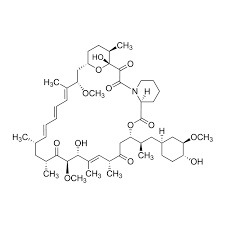
Rapamycin is an mTOR inhibitor originally approved as an immunosuppressant for organ transplant recipients at high daily doses. Most people think of it as a drug that weakens the immune system. At transplant-level dosing, it does. But at the low, intermittent doses used in longevity contexts (typically 3 to 6 mg once weekly), the effect appears to flip: mTOR inhibition upregulates autophagy, the cellular recycling program that degrades damaged proteins and organelles.
The Problem with Waiting for Perfect Data
The standard medical position is reasonable: rapamycin lacks Phase 3 longevity data in humans, so prescribing it for aging is premature. The problem with that position is time. Aging does not pause while trials enroll. The ITP mouse data was published in 2009. The Mannick immune data came in 2014. The PEARL trial began enrolling healthy adults aged 50 to 85 in 2024, but results are years away.
Meanwhile, the biology is not ambiguous. mTOR inhibition increases autophagy (Kim & Guan, 2015), reduces senescent cell burden in animal models (Wang et al., 2017), and improves cardiac function in aged mice (Flynn et al., 2013).
The Truth: What Human Data Exists
Three lines of human evidence deserve attention. First, the Mannick et al. (2014) everolimus trial in 218 older adults showed measurable immune rejuvenation at doses far below transplant levels. Second, a 2019 follow-up (Mannick et al., 2018) demonstrated that a combination of two mTOR inhibitors reduced respiratory infections in older adults by 30.6 percent over one year (n=652). Third, retrospective analyses of transplant recipients on rapamycin show lower cancer incidence compared to those on calcineurin inhibitors (Knoll et al., 2014).
None of this constitutes proof that rapamycin extends human lifespan. All of it constitutes evidence that mTOR inhibition modifies aging-relevant pathways in humans at tolerable doses.
The Most Common Mistake
The biggest error is treating rapamycin as a supplement. It is a prescription immunomodulator with real side effects. At weekly low doses, the most common adverse events are aphthous ulcers, mild lipid elevation, and occasional GI discomfort. Lipid panels, fasting glucose, and CBC with differential should be tracked at baseline and every 8 to 12 weeks during use.
Signals to Watch
| Signal | Lab Normal | Optimal Target |
|---|---|---|
| Fasting triglycerides | < 150 mg/dL | < 100 mg/dL |
| Fasting glucose | 65 to 99 mg/dL | 72 to 89 mg/dL |
| WBC count | 4.5 to 11.0 x10^9/L | > 4.0 x10^9/L |
| hsCRP | < 3.0 mg/L | < 1.0 mg/L |
| LDL-C | < 100 mg/dL | < 100 mg/dL |
What To Do
-
Get baseline labs before starting. A comprehensive metabolic panel, lipid panel, CBC, hsCRP, and fasting insulin establish your pre-intervention reference point.
-
Work with a physician experienced in off-label rapamycin. The dosing protocols in longevity contexts differ from transplant dosing by an order of magnitude.
-
Monitor lipids and glucose at 8 to 12 week intervals. If triglycerides climb above 200 mg/dL, dose reduction or a drug holiday is warranted.
-
Do not combine with daily caloric restriction without monitoring. Both rapamycin and severe caloric restriction suppress mTOR.
-
Track subjective recovery and immune function. If you notice increased frequency of colds, slow wound healing, or persistent fatigue, pause and re-evaluate with your physician.
How Rewind Fits
This is exactly the kind of intervention Rewind tracks over time. We monitor the biomarkers that rapamycin affects so you can see whether the drug is moving your biology in the right direction without hidden costs.
Start Here
If you are exploring pharmacological longevity interventions, begin with a biomarker baseline, not a prescription. Start your Rewind membership.
FAQ
Is rapamycin FDA-approved for aging?
No. All longevity use is off-label, prescribed at physician discretion.
What dose of rapamycin is used for longevity?
Most off-label protocols use 3 to 6 mg taken once weekly.
Does rapamycin cause immunosuppression at low doses?
At weekly low doses, the data suggests immune modulation rather than suppression.
How long do you need to take rapamycin?
No human trial has established an optimal duration. Most clinicians plan for years of use with ongoing monitoring.
Can you take rapamycin with metformin?
Some longevity physicians prescribe both. Fasting glucose monitoring is essential.
Rewind Insight: The gap between preclinical promise and clinical proof is where most longevity interventions live. Rapamycin has more preclinical support than any other candidate. The responsible path is to measure, intervene with medical guidance, and track the outcome.
Your Biology Is Already Changing
Whether or not you take rapamycin, mTOR is active in your cells right now. Rewind gives you that visibility, updated as your protocol evolves. See what Rewind tracks.
Rewind is a membership-based longevity platform. Individual outcomes vary.
This article is for informational purposes only and does not constitute medical advice.
References
Flynn, J. M., et al. (2013). Late-life rapamycin treatment reverses age-related heart dysfunction. Aging Cell, 12(5), 851-862.
Harrison, D. E., et al. (2009). Rapamycin fed late in life extends lifespan in genetically heterogeneous mice. Nature, 460(7253), 392-395.
Kim, Y. C., & Guan, K. L. (2015). mTOR: a pharmacologic target for autophagy regulation. Journal of Clinical Investigation, 125(1), 25-32.
Knoll, G. A., et al. (2014). Effect of sirolimus on malignancy and survival after kidney transplantation. BMJ, 349, g6679.
Mannick, J. B., et al. (2014). mTOR inhibition improves immune function in the elderly. Science Translational Medicine, 6(268), 268ra179.
Mannick, J. B., et al. (2018). TORC1 inhibition enhances immune function and reduces infections in the elderly. Science Translational Medicine, 10(449), eaaq1564.
Wang, R., et al. (2017). Rapamycin inhibits the secretory phenotype of senescent cells. Aging Cell, 16(3), 564-574.
Member discussion