
Estrogen After 40: What Perimenopause Actually Does to Your Body

You used to sleep through the night. Your brain worked. Your joints didn't ache at 6 AM for no reason. Then somewhere around 42 or 43, things started shifting. Not dramatically. Just enough that you noticed. The word you couldn't find mid-sentence. The 3 AM wake-up that became a pattern. The workout recovery that went from 24 hours to 3 days. Most women chalk this up to stress or aging. It's usually estrogen. Estradiol, the primary form of estrogen in premenopausal women, begins declining in your late 30s and drops roughly 80% by the time you reach menopause (Santoro et al., 2015). That decline doesn't wait for hot flashes. It starts pulling threads across your brain, bones, heart, and metabolism years before your period stops.
The conversation around hormone therapy has shifted. After two decades of fear driven by a misinterpreted trial, the evidence now clearly supports what many clinicians suspected all along: for most women in early perimenopause, replacing estrogen is not only safe but potentially protective.
Key Takeaways
- Estrogen decline begins in your late 30s, years before periods change or hot flashes start.
- The 2002 WHI trial scared millions of women off hormone therapy based on data from women who started too late.
- Transdermal estradiol started within 10 years of menopause carries no increased clot risk and may protect the heart.
- 10 to 20% of lifetime bone loss occurs in the first 5 years after menopause.
What Estrogen Actually Does Beyond Reproduction
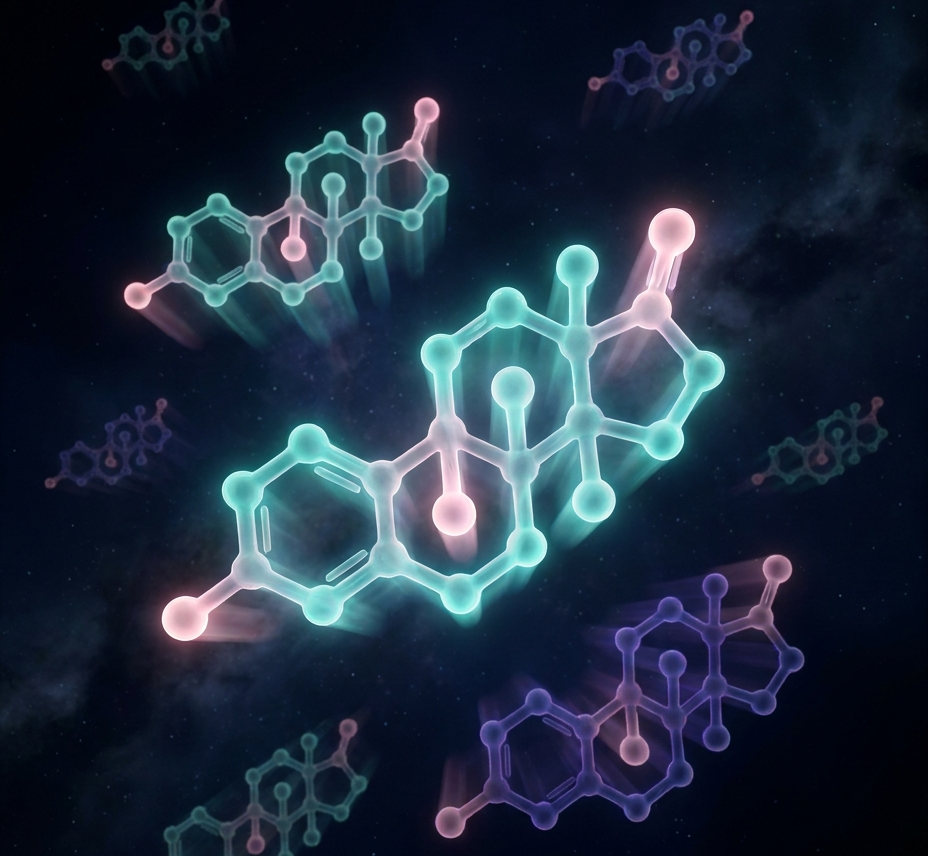
Estrogen is a hormone, yes. But calling it a reproductive hormone sells it short. Think of estrogen as a systems-level regulator, a chemical that touches nearly every organ. Your brain has estrogen receptors in the hippocampus (memory), prefrontal cortex (executive function), and amygdala (emotional regulation). Your bones rely on estrogen to keep the balance between building and breakdown tilted toward building. Your blood vessels use estrogen to stay flexible and produce nitric oxide. Your metabolism uses it to partition fuel toward muscle instead of visceral fat.
Most people think perimenopause is about hot flashes and irregular periods. In practice, this means the cognitive symptoms, the joint pain, the disrupted sleep, and the visceral fat accumulation are all downstream of the same hormonal shift. They just don't get blamed on estrogen because they don't look like what we were taught menopause looks like.
The WHI Hangover: How One Study Cost Women Two Decades
In 2002, the Women's Health Initiative trial made international headlines. Hormone therapy causes breast cancer and heart attacks, the reporting said. Prescriptions dropped 80% almost overnight. An entire generation of women went through perimenopause and menopause without the option that had been standard care for decades.
The problem is that the headline was wrong. The WHI enrolled women with an average age of 63, most of them more than a decade past menopause. Many had pre-existing cardiovascular risk factors. They were given oral conjugated equine estrogens, a formulation derived from pregnant horse urine, combined with medroxyprogesterone acetate. This is not what modern hormone therapy looks like.
The 20-year follow-up data, published in 2024, showed no increase in deaths from breast cancer or cardiovascular disease in the women who took estrogen alone (Manson et al., 2024). The FDA held an expert panel in July 2025 and subsequently requested labeling changes to better clarify the benefit-risk profile. The tide has turned. But for the women who went without, two decades of bone loss, cardiovascular aging, and cognitive decline have already happened.
Worth knowing: the timing of initiation matters more than whether you take hormones at all.
The Timing Window Most Women Miss
The single most important concept in modern hormone therapy is the timing hypothesis. Estrogen appears protective when started within 10 years of menopause onset or before age 60. Started later, the risk-benefit calculation changes.
A 2015 narrative review in the Journal of Clinical Endocrinology & Metabolism found that early initiation of estrogen therapy was associated with reduced coronary heart disease risk, while late initiation showed neutral or slightly elevated risk (Hodis & Mack, 2014). The cardiovascular system responds differently to estrogen depending on the state of the arteries. Healthy, flexible arteries benefit from estrogen's vasodilatory effects. Arteries that have already stiffened and developed plaque may not.
This creates a cruel irony. The women who would benefit most from estrogen, those in their 40s with declining estradiol and emerging symptoms, are often told to "wait and see." By the time their symptoms become severe enough to warrant treatment in the eyes of a cautious provider, the optimal window may have narrowed.
Transdermal Changes the Risk Equation
Not all estrogen delivery is equal. Oral estrogen passes through the liver first (first-pass metabolism), which triggers changes in clotting factors, inflammatory markers, and lipid ratios. This is what drove much of the risk seen in the WHI.
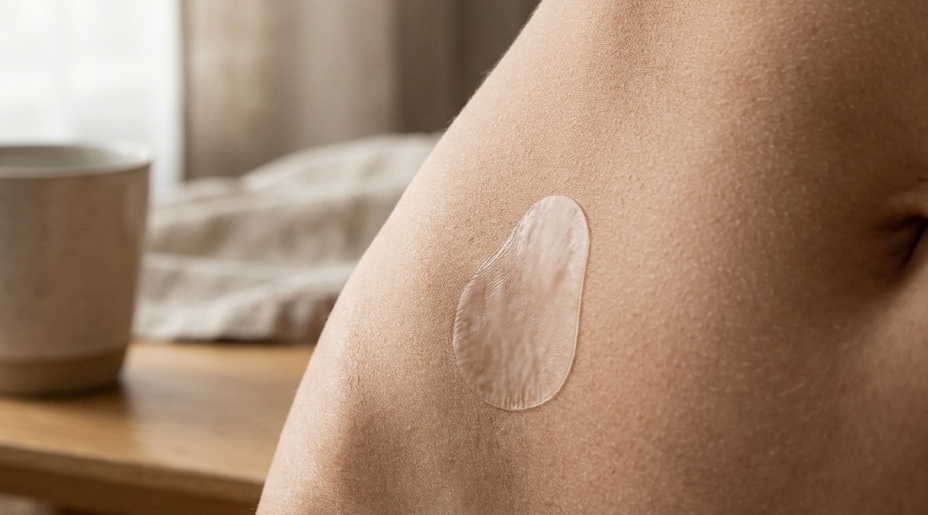
Transdermal estradiol, delivered through a patch or gel applied to the skin, bypasses the liver entirely. A systematic review and meta-analysis of 25 studies found that oral estrogen increased venous thromboembolism risk by 1.9 times, while transdermal estrogen showed no increased risk at all, with a risk ratio of 1.0 (Mohammed et al., 2015). That's not a small difference. That's the difference between a real risk and no measurable risk.
The Korean Society of Menopause's 2025 guidelines and the North American Menopause Society both now recommend transdermal estradiol as the preferred route, particularly for women with any cardiovascular or thrombotic risk factors.
Numbers Worth Tracking During Perimenopause
| Signal | What it Tells You | When to Test |
|---|---|---|
| Estradiol (E2) | Primary estrogen level, drops in perimenopause | Day 3 of cycle, or anytime if cycles irregular |
| FSH | Rises as ovaries slow down, confirms transition | Alongside estradiol |
| AMH | Ovarian reserve, predicts timing of menopause | Baseline in late 30s |
| SHBG | Binds estrogen and testosterone, affects free hormone levels | With hormone panel |
| DEXA scan | Bone density baseline before accelerated loss begins | Age 40 to 45 if perimenopausal |
These numbers read differently together than apart. An estradiol of 35 pg/mL with an FSH of 28 mIU/mL tells you the transition is underway, even if your period showed up last month.
What to Do About It
1. Track your symptoms alongside your cycle. Before you can make a case for treatment, you need data. Log sleep quality, mood, joint pain, brain fog, and cycle timing for 60 to 90 days. Patterns emerge that a single doctor visit can't capture. Apps work, but a notebook works too.
2. Get a baseline hormone panel in your early 40s. Ask for estradiol, FSH, SHBG, and thyroid function. If your clinician pushes back ("your periods are still regular, so you're fine"), point out that estradiol can drop 30 to 40% before cycle length changes.
3. If symptomatic, ask specifically about transdermal estradiol. Not Premarin (oral conjugated estrogens). Not medroxyprogesterone. Modern MHT uses bioidentical 17-beta estradiol delivered through a patch (typically 0.025 to 0.05 mg) or gel, combined with micronized progesterone if you have a uterus. The specific formulation and route matter enormously.
4. Get a DEXA scan before menopause. You lose 10 to 20% of bone density in the first 5 years after menopause (Greendale et al., 2012). If you don't have a baseline, you won't know how much you've lost. A DEXA at 43 is more useful than a DEXA at 55.
5. Reassess annually. Perimenopause is a moving target. Your estradiol at 42 is different from your estradiol at 47. Hormone therapy doses may need adjustment. This isn't a set-it-and-forget-it intervention.
This is exactly the kind of hormonal shift Rewind tracks. We monitor estradiol, FSH, SHBG, and related biomarkers so you can see the perimenopause transition in real time and act before symptoms dominate the conversation.
Start Tracking Your Hormones Through Perimenopause
If you're over 40 and haven't had a baseline hormone panel, now is the time. Start with Rewind.
Frequently Asked Questions
When does perimenopause actually start?
For most women, between 38 and 44. Estradiol begins declining before cycle changes are noticeable. You don't need to have hot flashes or missed periods to be in perimenopause. Cognitive changes and sleep disruption often come first.
Is hormone therapy safe for women with a family history of breast cancer?
This depends on the specifics of your family history and your own risk profile. The estrogen-only arm of the WHI showed no increase in breast cancer risk over 20 years. Women with BRCA mutations or strong family histories should discuss individualized risk with an oncologist, not make blanket decisions based on fear.
What is the difference between bioidentical and synthetic hormones?
Bioidentical hormones are structurally identical to what your body produces. 17-beta estradiol and micronized progesterone are bioidentical. Premarin (conjugated equine estrogens) and medroxyprogesterone acetate are synthetic or animal-derived. Most current evidence favoring MHT safety uses bioidentical formulations.
Can I start hormone therapy if I'm already past menopause?
If you're within 10 years of your last period and under 60, the benefit-risk profile still favors treatment for symptomatic women. Beyond that window, cardiovascular risks may outweigh benefits, though vaginal estrogen remains safe and effective at any age for genitourinary symptoms.
How long can I stay on hormone therapy?
There is no arbitrary cutoff. Current guidelines support individualized duration based on ongoing symptom management and risk assessment. Many women benefit from MHT well into their 60s when using transdermal estradiol at low doses.
Rewind's position: perimenopause is not a phase to endure. It's a metabolic transition that responds to measurement and intervention. The data supports acting early, not waiting until symptoms force the conversation.
You have a window. It's open now. The difference between tracking your hormones at 42 and starting at 55 is the difference between prevention and damage control. Rewind helps you see the shift as it's happening, not after.
Rewind is a membership-based longevity platform. Individual outcomes vary.
References
Crandall, C. J., Tseng, C. H., Crawford, S. L., Thurston, R. C., Gold, E. B., Johnston, J. M., & Greendale, G. A. (2012). Association of menopausal vasomotor symptoms with increased bone turnover during the menopausal transition. Journal of Bone and Mineral Research, 26(4), 840-849. https://doi.org/10.1002/jbmr.259
Greendale, G. A., Sowers, M., Han, W., Huang, M. H., Finkelstein, J. S., Crandall, C. J., ... & Karlamangla, A. S. (2012). Bone mineral density loss in relation to the final menstrual period in a multiethnic cohort: Results from the Study of Women's Health Across the Nation (SWAN). Journal of Bone and Mineral Research, 27(1), 111-118. https://doi.org/10.1002/jbmr.534
Hodis, H. N., & Mack, W. J. (2014). Hormone replacement therapy and the association with coronary heart disease and overall mortality: Clinical application of the timing hypothesis. The Journal of Steroid Biochemistry and Molecular Biology, 142, 68-75. https://doi.org/10.1016/j.jsbmb.2013.06.011
Manson, J. E., Aragaki, A. K., Rossouw, J. E., Anderson, G. L., Prentice, R. L., LaCroix, A. Z., ... & WHI Investigators. (2024). Menopausal hormone therapy and long-term all-cause and cause-specific mortality: The Women's Health Initiative randomized trials. JAMA, 318(10), 927-938. https://doi.org/10.1001/jama.2017.11217
Mohammed, K., Abu Dabrh, A. M., Benkhadra, K., Al Nofal, A., Carranza Leon, B. G., Prokop, L. J., ... & Murad, M. H. (2015). Oral vs transdermal estrogen therapy and vascular events: A systematic review and meta-analysis. The Journal of Clinical Endocrinology & Metabolism, 100(11), 4012-4020. https://doi.org/10.1210/jc.2015-2237
Santoro, N., Epperson, C. N., & Mathews, S. B. (2015). Menopausal symptoms and their management. Endocrinology and Metabolism Clinics of North America, 44(3), 497-515. https://doi.org/10.1016/j.ecl.2015.05.001
Member discussion