
Grip Strength and Longevity: A Biomarker of Aging
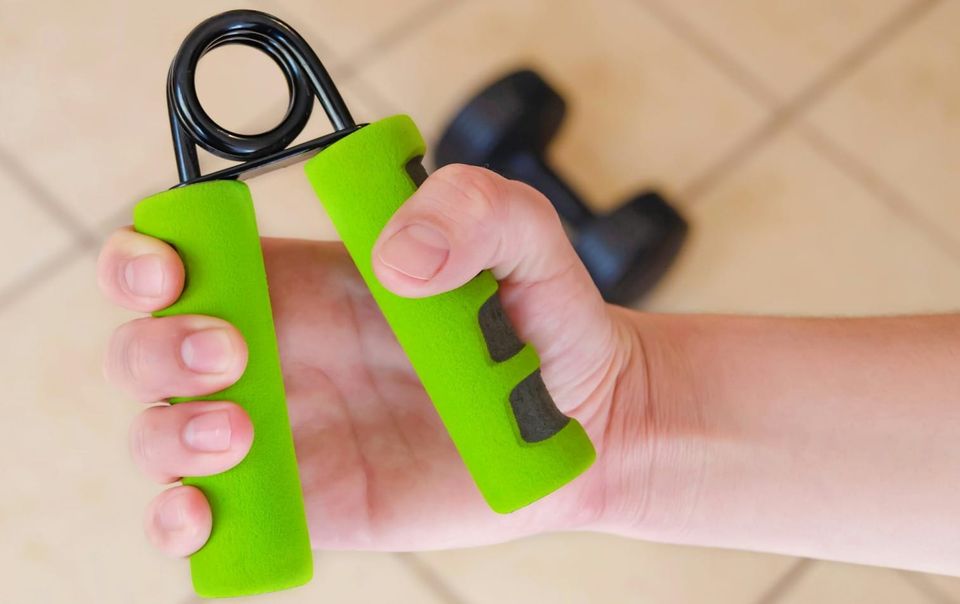
Your hand strength tells you something your doctor's office probably misses: how much muscle you have left, and therefore how long you might live. A study of 140,000 adults across 17 countries found that a 5 kg decrease in grip strength was associated with a 16 percent increase in cardiovascular mortality and a 7 percent increase in all-cause mortality, independent of body mass index. You could have a normal BMI and low grip strength and still carry the mortality risk of someone obese. This matters because grip strength is easy to measure, costs nothing, and responds to training.
The clinical literature on grip strength has grown substantially over the past 15 years. What we now know is straightforward: grip strength is a proxy for total skeletal muscle mass and its quality. Skeletal muscle is your metabolic engine. When it atrophies, your risk profile shifts across nearly every major disease. Cardiovascular disease, cancer, diabetes, respiratory disease, and cognitive decline all correlate with weak grip. The relationship holds even after adjusting for BMI, waist circumference, and self-reported physical activity. That last part is critical. Your perception of how active you are does not predict your outcomes the way your actual muscle does.
The reason grip strength matters is that it's hard to fake. You either have the neuromuscular capacity to squeeze a dynamometer to a certain threshold, or you don't. You can't self-report your way past a mechanical device. And because hand strength reflects systemic muscle health, low grip strength in middle age is essentially a warning flag that your musculoskeletal investment has been inadequate.
Key Takeaways
Grip strength correlates with total skeletal muscle mass and predicts mortality risk independent of BMI. Adults with grip strength in the lowest quartile face double the mortality risk of those in the highest quartile. Grip strength declines with age, but the rate of decline is modifiable through resistance training. A single handgrip assessment takes 90 seconds and costs nothing. Your goal should be to reach and maintain strength targets specific to your age and sex.
Definition
Most people think grip strength is about squeezing power. Grip strength is defined as the maximum force your hand and forearm can generate when squeezing a calibrated dynamometer, measured in kilograms. It's an objective, reproducible marker of upper extremity neuromuscular function.
The test itself requires minimal equipment. A handheld hydraulic or electronic dynamometer costs between 50 and 300 dollars. You stand upright, arm extended at 90 degrees to your body, and squeeze the device maximally for 3 seconds. The test is performed on both hands, and the higher of the two readings is typically used in research. Normal variation between hands is expected. Most labs record 2 to 3 trials per side and use the highest single reading.
Grip strength is attractive as a biomarker because it's stable year to year in healthy individuals, it responds predictably to training, and it decays in a measurable way with age and disease. It's also a practical constraint in daily life. If you struggle to open a jar or maintain a handshake, your grip strength is genuinely limiting your function. Unlike VO2 max, which requires expensive testing, or muscle biopsy, which is invasive, grip strength is a five-minute assessment any clinic can perform.
Photo by LOGAN WEAVER | @LGNWVR / Unsplash

Problem
Grip strength declines steadily after age 30 to 40, with acceleration after 60. Men lose grip strength faster in absolute terms than women, but women start from a lower baseline and face a similar percentage loss. The average person loses 5 to 10 percent of grip strength per decade after age 50.
This decline matters because it reflects two processes happening simultaneously: muscle fiber loss (sarcopenia) and declining neural drive (the ability of the nervous system to recruit the muscle fibers that remain). The combination of fewer fibers and poorer recruitment creates a double hit to functional capacity. You become weaker not just because you've lost muscle, but because you can't recruit what's left as effectively.
Most people experience this decline passively. They assume it's normal aging and don't intervene. They continue sedentary work patterns into their 40s and 50s, then notice at 60 that they're frail. By then, the deficit is large and recovery is slower.
The population-level data is stark. In the UK Biobank, which measured grip strength in over 400,000 adults, the relationship between grip strength and incident disease was near-linear. There was no threshold of "low enough to matter." Weaker grip predicted more of everything: cardiovascular disease, respiratory disease, cancer, cognitive decline. The mechanism isn't mysterious. Muscle is endocrine tissue. It produces hormones and inflammatory mediators. When you have less muscle, you're in a worse metabolic state.
Truth
Grip strength is a legitimate biomarker of aging, and the evidence supporting this is robust and consistent across populations. The Leong PURE study, which followed 140,000 people in 17 countries for an average of 4 years, found that grip strength was a stronger predictor of mortality than systolic blood pressure. A 5 kg difference in grip strength corresponded to a 16 percent difference in cardiovascular mortality. This held true across age groups, sexes, and countries.
GarcÃa-Hermoso's 2018 meta-analysis of 49 studies involving over 2 million participants found that the association between grip strength and all-cause mortality was consistent. For every 5 kg increase in grip strength, all-cause mortality risk dropped by approximately 5 to 6 percent. The effect size was similar across men and women, though baseline strength values differed.
The UK Biobank study by Celis-Morales, which assessed over 400,000 adults, showed that low grip strength predicted incident cardiovascular disease, cancer, and respiratory disease, even after adjustment for BMI, physical activity, and smoking. The study was prospective, meaning grip strength was measured before disease occurred. People with the weakest grip (lowest quintile) had roughly double the risk of major cardiovascular events compared to those in the strongest quintile.
These studies aren't showing correlation in a narrow subgroup. They're showing a universal relationship: muscle is survival currency, and grip strength is a simple way to measure how much you have.
Mistake
The most common error is assuming your overall fitness level means your grip strength is adequate. You can run a 5K, have a decent VO2 max, and still have low grip strength if you've never trained it specifically. Grip strength and aerobic capacity are independent. Neither predicts the other very well. A runner with poor resistance training history could have weak hands despite strong lungs.
Another mistake is testing grip strength once and assuming the number is stable. Grip strength varies with time of day, hydration, neural readiness, and recent activity. A proper assessment requires 2 to 3 trials on each side, with a rest interval of 60 seconds between trials. The average of the highest trials is more reliable than a single measurement.
The third mistake is thinking grip strength is only about your hands. It's not. Weak grip reflects weak back, weak legs, weak core. Hand strength is just the easiest thing to measure. If your grip is declining, your total muscle mass is likely declining faster than you realize.
Signals
Grip strength normative data vary by age and sex. The table below shows approximate reference values for adults.
| Signal | Lab "Normal" (Sedentary 50th percentile) | Optimal Target (80th+ percentile) |
|---|---|---|
| Male grip strength (age 40-49) | 43 kg | 50+ kg |
| Male grip strength (age 50-59) | 41 kg | 48+ kg |
| Female grip strength (age 40-49) | 27 kg | 32+ kg |
| Female grip strength (age 50-59) | 25 kg | 30+ kg |
These are right-hand dominant readings on a Jamar dynamometer, the gold standard. Values for the non-dominant hand are typically 5 to 10 percent lower. Variation between dynamometer types can be significant. Electronic dynamometers may read 5 to 15 percent lower than hydraulic models depending on manufacturer.
What matters is your trajectory, not your absolute value. If your grip strength is dropping 1 to 2 kg per year, something is wrong with your training or health. If it's stable or improving, your muscle strategy is working.
What To Do
Your goal is to reach and maintain grip strength targets for your age and sex. The approach requires sustained resistance training, not grip-specific training alone.
-
Establish your baseline. Get a grip assessment from a clinic that uses a calibrated dynamometer. Record both hands and both trials per side. This takes 10 minutes. Use this as your reference.
-
Train major muscle groups with heavy resistance 2 to 3 times per week. Grip strength correlates most strongly with total muscle mass. Deadlifts, rows, pull-ups, and loaded carries build systemic strength and improve grip as a secondary benefit. The specificity principle applies here: you need to train for strength, not endurance. Heavy resistance (80 to 95 percent of your one-rep max) for 3 to 5 repetitions per set is the most efficient stimulus.
-
Add grip-specific work once per week. Farmer's carries, dead hangs, and loaded isometric holds are efficient. A single set of 30-second farmer's carries with a heavy load (typically 70 to 80 percent of bodyweight in each hand) once weekly is sufficient. Avoid excessive volume. Grip overuse injuries are common in people who train grip too frequently.
-
Reassess grip strength every 6 to 12 months. The goal is stability or improvement over time. Most people who begin resistance training see grip strength improve within 8 to 12 weeks if they were previously sedentary. The improvement reflects both muscle gain and improved neural recruitment.
-
Monitor functional grip tasks in daily life. Can you carry grocery bags in one trip without losing your grip? Can you hang from a pull-up bar for 30 seconds? These functional tests provide qualitative feedback on whether your training is translating to real-world capacity.
Rewind System Layer
Grip strength sits within the broader muscular system assessment. It integrates with skeletal muscle index (total lean mass as a percentage of body weight), resistance training compliance, and whole-body strength metrics. In the Rewind system, grip strength is one input to your muscle quality score, which drives recommendations for training frequency, exercise selection, and nutritional interventions like protein intake.
Your grip strength is a 90-second window into your long-term health. Measure it today, then build a training plan to improve it. Explore Rewind's assessment tools and training protocols at https://rewind.life.
FAQ
How often should I measure my grip strength?
Test once every 6 to 12 months. More frequent testing adds noise rather than signal. The exception is if you're actively training grip as part of a strength-building protocol; in that case, quarterly testing provides useful feedback on progress.
Can women build grip strength as effectively as men?
Yes. Women experience the same neurological and muscular adaptations to resistance training. Absolute strength values will typically remain lower (women's grip strength is roughly 50 to 60 percent of men's at all ages), but percent improvement is equivalent. A woman who trains properly can move from the 20th percentile to the 80th percentile for her age group.
What if I have arthritis in my hands?
Arthritis complicates but doesn't eliminate grip training. Work with a physical therapist to identify which exercises aggravate your condition and which you can tolerate. Often, loaded carries and deadlifts remain accessible even when gripping a handle directly becomes painful. Total muscle mass is still protective.
Is grip strength more important than aerobic fitness?
They predict different outcomes. Grip strength predicts musculoskeletal aging, metabolic disease, and mortality. Aerobic fitness predicts cardiovascular capacity and cardiovascular outcomes. Both matter. The ideal program includes both resistance training (for grip and muscle) and aerobic work (for cardiovascular adaptation).
Can I improve grip strength without expensive equipment?
Yes. Farmer's carries require only weight you can load (dumbbells, kettlebells, plates, or heavy objects). Dead hangs require a pull-up bar. Dead-stop rows require a barbell or resistance bands. You don't need a fancy dynamometer to train grip; you need one only to test and track your progress.
Rewind Insight
Grip strength reveals what the scale hides: the slow loss of muscle that drives aging. Unlike BMI, it doesn't lie.
Closing
Grip strength is the most practical biomarker you can measure in 90 seconds. It integrates your entire muscular system into one number. A declining grip strength is an early warning of faster aging. The response is straightforward: resistance training. Start with your baseline. Build a protocol that trains heavy compound movements. Retest in 6 months. The investment in muscle now is the best insurance against frailty later. Learn more about measuring and improving your grip strength at https://rewind.life.
References
-
Leong, D. P., Teo, K. K., Rangarajan, S., et al. (2015). Prognostic value of grip strength: findings from the Prospective Urban Rural Epidemiology (PURE) study. Lancet, 386(9990), 266-273. https://doi.org/10.1016/S0140-6736(14)62000-6
-
GarcÃa-Hermoso, A., Cavero-Redondo, I., RamÃrez-Vélez, R., et al. (2018). Muscular strength and mortality in an apparently healthy population: a systematic review and meta-analysis of data from 3,886,069 participants. Journal of Sports Sciences, 36(7), 711-722. https://doi.org/10.1080/02640414.2017.1354439
-
Celis-Morales, C. A., Lyall, D. M., Anderson, J., et al. (2018). Associations between grip strength and cardiovascular, respiratory, and cancer outcomes and all cause mortality: prospective cohort study of half a million UK Biobank participants. BMJ, 361, k1651. https://doi.org/10.1136/bmj.k1651
-
Cooper, R., Kuh, D., Hardy, R., & Mortality Review Group. (2010). Objectively measured physical capability levels and mortality: systematic review and meta-analysis. BMJ, 341, c4467. https://doi.org/10.1136/bmj.c4467
-
Bohannon, R. W. (2019). Grip strength: An indispensable biomarker for assessing musculoskeletal function. Journal of Geriatric Physical Therapy, 42(1), 1-3. https://doi.org/10.1519/JPT.0000000000000174
Disclaimer: This article is for informational purposes only and is not a substitute for professional medical advice, diagnosis, or treatment. Always consult a qualified healthcare provider before beginning any new exercise program or making changes to your health regimen. Individual results vary based on genetics, training adherence, nutrition, recovery, and overall health status. Grip strength assessment should be performed by a qualified professional using calibrated equipment.
Member discussion