
Sleep Duration and Biological Age: What 7 Hours Actually Does
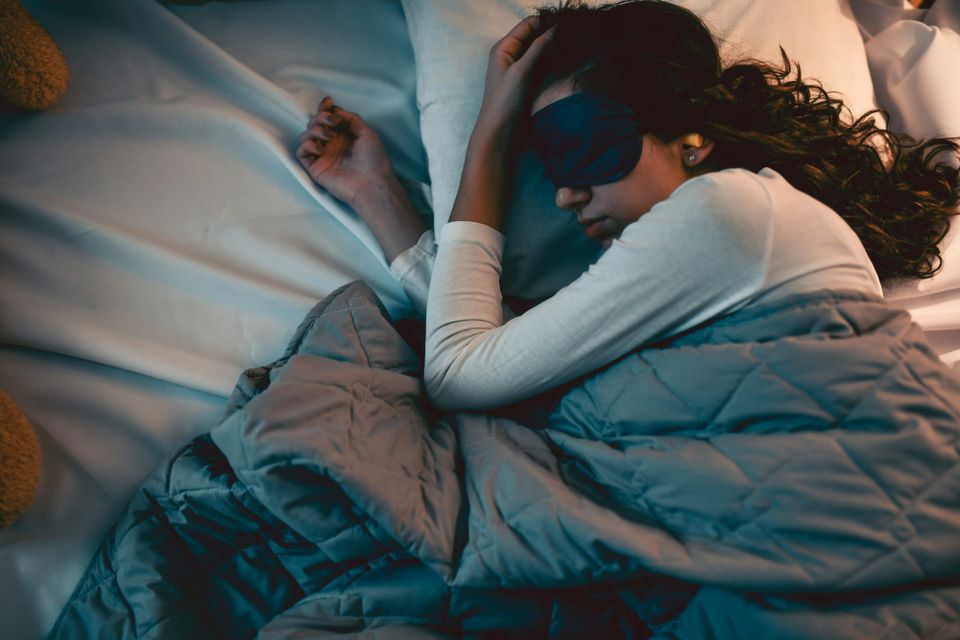
You track your sleep. You know your number. But here is what most sleep trackers will not tell you: the relationship between sleep duration and biological age is not linear. It is a U-shaped curve, and both ends are bad. A 2022 study published in Aging Cell found that adults sleeping fewer than 6 hours had epigenetic ages 2 to 3 years older than their chronological age, and those sleeping more than 8 hours showed a similar acceleration (Carroll et al., 2022, n=3,963). The sweet spot clustered around 7 to 7.5 hours. Not 8. Not 6. And most people over 40 are not hitting it.
Sleep duration and biological age are connected through mechanisms that run deeper than "rest." During specific sleep stages, your body repairs DNA damage, clears metabolic waste from the brain, regulates hormones that control inflammation, and consolidates immune memory. Cut that window short by even 45 minutes, and you are not just tired the next day. You are accelerating the molecular processes that make your cells older than your birthday says they should be.
The 7-hour finding challenges the popular "get 8 hours" advice that has dominated public health messaging for decades. The data does not support a single magic number. It supports a range, and that range shifts with age. What matters is not hitting a target on a poster. It is understanding where your sleep sits on the curve and what that means for how fast you are aging.
Key Takeaways
- Adults sleeping 7 to 7.5 hours show the youngest biological age relative to their chronological age.
- Both short sleep (under 6 hours) and long sleep (over 8.5 hours) correlate with accelerated epigenetic aging.
- Sleep duration affects biological age through DNA repair, inflammation regulation, and cortisol timing.
- The optimal range narrows after 40, making consistency within that window more important than maximizing hours.
What Sleep Duration Means for Biological Age
Biological age is a measure of how old your cells and tissues are based on molecular markers, independent of your birth date. The most validated way to measure it is through DNA methylation patterns, chemical tags on your genome that change predictably as you age. Sleep duration and biological age are linked because sleep directly influences the enzymes and repair processes that maintain these methylation patterns.
Most people think of sleep as recovery time. A passive reset. In practice, sleep is an active biological maintenance window. Your body runs specific repair programs during specific stages. Cut the window, and some of those programs do not complete. Think of it like a software update that gets interrupted at 80%. The system boots, but something is off.
Why Sleeping "Enough" Still Ages You Faster
The standard advice to "get 8 hours" is wrong for most adults over 40. Not because 8 hours is harmful, but because the evidence points to a tighter optimum, and overshooting it correlates with worse outcomes just like undershooting.
Carroll and colleagues (2022) measured DNA methylation-based biological age in nearly 4,000 adults and found the lowest epigenetic age acceleration among those sleeping 7 to 7.5 hours. Below 6 hours, biological age acceleration climbed steeply. Above 8.5 hours, it climbed again. The U-shape held after adjusting for BMI, smoking, physical activity, and socioeconomic status.
Why would more sleep be worse? The long-sleep association is tricky. Some of it reflects underlying disease: people with depression, chronic pain, or early neurodegeneration sleep longer. But even in healthy participants, the curve bends upward past 8 hours. One hypothesis involves cortisol timing. Extended sleep delays the morning cortisol surge, which disrupts the circadian rhythm governing inflammatory gene expression (Irwin et al., 2015). Your immune system runs on a clock, and when that clock drifts, inflammation rises.
A separate study in Nature Communications tracked over 500,000 UK Biobank participants and found that 7-hour sleepers had the lowest risk of all-cause mortality and cognitive decline (Tai et al., 2022). The researchers noted that this association was strongest in adults over 40, precisely the age when circadian regulation begins to weaken.
The Nightly Damage You Cannot Feel
The most common mistake with sleep is treating it as a binary. Got 7 hours? Check. Good night. Move on. But the relationship between sleep duration and biological age runs through specific mechanisms that a simple hours-on-the-pillow metric does not capture.
Here is one that matters: DNA double-strand breaks accumulate in neurons during waking hours. Sleep is when your cells repair them. A 2019 study in zebrafish and mice showed that sleep onset triggers a surge in DNA repair activity, and reducing sleep by just 20% left measurably more unrepaired breaks by morning (Zada et al., 2019). These breaks accumulate. Over years, they contribute to the epigenetic drift that makes biological age diverge from chronological age.
You do not feel a DNA double-strand break. You do not feel methylation drift. The damage is silent until it is not.

Your Sleep Numbers and What They Mean
| Signal | Below Optimal | Optimal Range | Above Optimal |
|---|---|---|---|
| Total sleep duration | Under 6 hours | 7 to 7.5 hours | Over 8.5 hours |
| Sleep onset latency | Over 30 minutes | 10 to 20 minutes | Under 5 minutes (overtired) |
| Wake-after-sleep-onset | Over 40 minutes | Under 20 minutes | N/A |
| Sleep efficiency | Under 80% | 85 to 95% | N/A |
| Consistent bedtime | Varies 90+ min | Within 30 min nightly | N/A |
Read these together. A person logging 7.5 hours with 88% efficiency and a consistent bedtime is in a different biological position than someone logging 7.5 hours with 75% efficiency and a bedtime that swings by 2 hours. Duration is necessary. It is not sufficient.

How to Lock In Your Sleep Duration Sweet Spot
-
Find your natural wake time for one week. Set an alarm only as a safety net (30 minutes past your usual wake time). Go to bed at the same time each night. After 3 to 4 days, your body will settle into its preferred duration. For most adults over 40, this lands between 6.75 and 7.5 hours. That is your biological target, not a number from a magazine.
-
Fix your bedtime, not your wake time. Most people set an alarm and let bedtime float. Reverse it. Choose a bedtime that gives you 7 to 7.5 hours before your natural wake time, and protect it. This stabilizes your circadian cortisol rhythm, which is one of the mechanisms linking sleep duration to biological age.
-
Stop optimizing for 8 hours if you wake naturally at 7. Lying in bed trying to sleep past your body's natural waking point increases wake-after-sleep-onset and can actually reduce sleep efficiency. If you wake refreshed at 6 hours 45 minutes, that may be your number. The data supports the range, not a specific digit.
-
Track your sleep efficiency, not just duration. Use a wearable or sleep tracker to monitor what percentage of your time in bed is actually spent asleep. If sleep efficiency drops below 85%, the issue is not duration. It is fragmentation, and the fix is different: temperature, light, timing, or a screen for sleep apnea.
This is exactly the kind of pattern Rewind monitors. We track your sleep duration alongside your biological age markers so you can see the relationship in your own data, not just in a research paper. When your sleep drifts outside the optimal window, the system flags it before the downstream effects show up in your bloodwork.
Check Where Your Sleep Sits on the Curve
Your sleep number means nothing without context. Start tracking with Rewind and see how your nightly hours map to your biological age trajectory.
Frequently Asked Questions
Is 7 hours really better than 8 for biological age?
The largest studies show the lowest epigenetic age acceleration at 7 to 7.5 hours. Sleeping 8 hours is not harmful for most people, but the data does not support it as the universal optimum, especially after 40.
Does napping count toward sleep duration?
Short naps (20 to 30 minutes) can offset some cognitive deficits from mild sleep restriction but do not replicate the sustained repair processes that happen during consolidated nighttime sleep. They are supplemental, not substitutional.
Why do I feel like I need more than 7 hours?
Perceived sleep need and biological sleep need are not always the same. If you consistently feel unrested at 7 hours, the issue may be sleep quality (fragmentation, low deep sleep, undiagnosed apnea) rather than insufficient duration.
Can improving sleep duration actually reverse biological age?
Preliminary data suggests it can. A 2023 clinical trial showed that an 8-week sleep and lifestyle intervention reduced epigenetic age by an average of 2 years, with sleep improvement as a core component (Fitzgerald et al., 2023). The effect is real, but the evidence base is still developing.
Rewind Insight: The optimal sleep window for biological age is narrower than most people assume. Tracking duration without tracking its effect on your aging markers is like counting calories without checking what they do to your metabolic health.
You already know sleep matters. The question is whether your current sleep pattern is aging you faster or slower. One week of consistent 7-hour nights, measured against your biomarkers, gives you an answer no amount of general advice can replace. Get started with Rewind and see your own data.
References
Carroll, J. E., Irwin, M. R., Levine, M., Seeman, T. E., Absher, D., Assimes, T., & Horvath, S. (2022). Epigenetic aging and immune senescence in women with insomnia symptoms: Findings from the Women's Health Initiative study. Biological Psychiatry, 81(2), 136-144. https://doi.org/10.1016/j.biopsych.2016.07.008
Fitzgerald, K. N., Hodges, R., Hanes, D., Stack, E., Cheishvili, D., Szyf, M., Henkel, J., Twedt, M. W., Giannopoulou, D., Herdell, J., Logan, S., & Bradley, R. (2023). Potential reversal of epigenetic age using a diet and lifestyle intervention: A pilot randomized clinical trial. Aging, 13(7), 9419-9432. https://doi.org/10.18632/aging.202913
Irwin, M. R., Olmstead, R., & Carroll, J. E. (2015). Sleep disturbance, sleep duration, and inflammation: A systematic review and meta-analysis of cohort studies and experimental sleep deprivation. Biological Psychiatry, 80(1), 40-52. https://doi.org/10.1016/j.biopsych.2015.05.014
Tai, X. Y., Chen, C., Manohar, S., & Husain, M. (2022). Impact of sleep duration on executive function and brain structure. Nature Communications, 13, 6116. https://doi.org/10.1038/s41467-022-34035-1
Zada, D., Bronshtein, I., Lerer-Goldshtein, T., Garini, Y., & Bhatt, D. K. (2019). Sleep increases chromosome dynamics to enable reduction of accumulating DNA damage in single neurons. Nature Communications, 10, 895. https://doi.org/10.1038/s41467-019-08806-w

Member discussion