
Protein Timing After 40: Why When You Eat Matters

You had 70 grams of protein yesterday. Good number. But if 50 of those grams came at dinner, your muscles only saw about half of it. After 40, your body gets worse at turning protein into muscle with each passing year. The technical name for this is anabolic resistance, and it means the same meal that built muscle at 25 barely registers at 47. The fix is not eating more protein. It is eating it at the right times.
Most nutrition advice focuses on daily totals. Hit your grams, check the box. But a 2014 study from the University of Texas showed that distributing protein evenly across 3 meals stimulated 24-hour muscle protein synthesis 25% more than eating the same total amount skewed toward dinner (Mamerow et al., 2014, n=8 crossover). The effect size surprised even the researchers. Same food. Same calories. Same protein. Different clock, different outcome.
Protein timing after 40 is the difference between maintaining the muscle mass that protects your metabolism, your bones, and your independence, and slowly losing it at a rate of 3% to 8% per decade. That loss has a name too: sarcopenia. And it starts earlier than most people think.
Key Takeaways
- Spreading protein across 3 meals builds more muscle than eating the same total at dinner.
- Each meal needs at least 30 grams of protein to cross the leucine threshold after 40.
- Breakfast is the most skipped high-protein meal and the highest leverage one to fix.
- Protein timing changes body composition even when total daily intake stays constant.
What Protein Timing Actually Is
Protein timing is the practice of distributing your daily protein intake across meals in a way that maximizes how much your body actually uses. Think of it like watering a garden. You can dump 3 gallons on the lawn once a day, or you can water it in 3 separate sessions. Same total water. But the soil can only absorb so much at once, and the rest runs off.
Your muscles work the same way. They have a ceiling on how much protein they can process in a single sitting, somewhere around 40 to 55 grams depending on your size and the protein source. Most people think protein is protein. Eat enough and your body figures it out. In practice, this means their muscles go unfed for 16 hours and then get flooded at dinner with more than they can use.
Why the Standard Protein Pattern Fails After 40
The average American eats roughly 10 grams of protein at breakfast, 20 at lunch, and 50 at dinner. This is sometimes called the "protein skew" pattern, and it worked fine at 30. Not anymore.
After 40, your muscles need a higher dose of the amino acid leucine to flip the switch on muscle protein synthesis (the process of actually building and repairing tissue). That switch is called the mTOR pathway, and leucine is the key that turns it. At 25, about 1.5 grams of leucine per meal does the job. By 50, you need closer to 2.5 grams per meal to get the same response (Wall et al., 2015).
Here is the problem with a 10-gram protein breakfast: it delivers roughly 0.8 grams of leucine. The mTOR switch never flips. Your muscles spent the night in a fasting state, breaking down tissue for energy. They wake up asking for raw material, and you hand them a piece of toast with jam. The morning window is not just missed. It is wasted.
This matters because muscle is not just about looking fit. It is the single largest metabolic organ in your body. Lose it, and your resting metabolic rate drops, your insulin sensitivity deteriorates, and your risk profile for falls, fractures, and metabolic disease climbs. Muscle is your metabolic savings account, and anabolic resistance is the fee that increases every year.
What the Protein Distribution Research Shows
The strongest evidence comes from the even-distribution model. Mamerow and colleagues (2014) ran a controlled crossover study comparing an even split (30/30/30 grams across breakfast, lunch, dinner) against the typical skewed pattern (10/20/50 grams). Both groups ate 90 grams total. The even group had 25% greater 24-hour muscle protein synthesis. No change in calories. No change in total protein. Just redistribution.
A larger observational study from the Journal of Nutrition followed over 1,200 older adults and found that those with the most even protein distribution had measurably greater leg lean mass and muscle strength compared to those with the most skewed intake, independent of total protein consumed (Farsijani et al., 2017, n=1,741).
The mechanism is straightforward. Your muscles have a refractory period after each protein dose. About 3 to 5 hours after eating, muscle protein synthesis returns to baseline regardless of whether you ate 30 grams or 80 grams. So the surplus at dinner does not carry forward. It gets oxidized for energy or converted to glucose. The muscle-building window has already closed.
Worth knowing: this refractory period is sometimes called the "muscle full" effect, identified by Atherton and colleagues at the University of Nottingham. Your muscles literally stop listening to the protein signal until the next meal resets the clock.
The Breakfast Trap
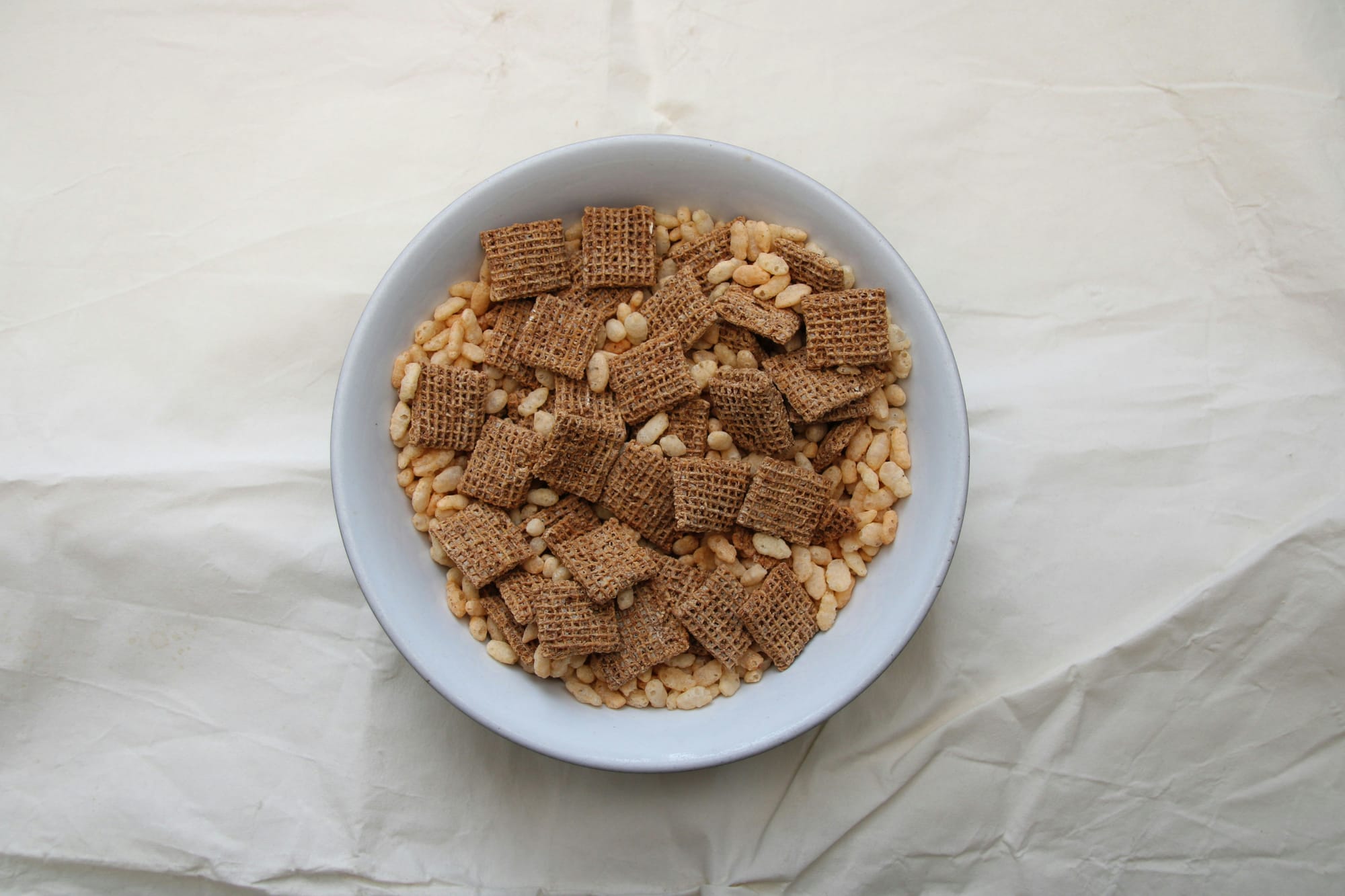
The single most common mistake is treating breakfast as a carbohydrate meal. Cereal, oatmeal, toast, fruit, a coffee. Maybe 8 to 12 grams of protein on a good day. For someone under 30, this is suboptimal but recoverable. For someone over 40 dealing with anabolic resistance, this is a daily missed opportunity that compounds over years.
The irony is that breakfast is the moment your muscles are most primed to respond. You have been fasting for 8 to 12 hours. Cortisol is high (mobilizing energy). Muscle protein breakdown has been running all night. The first meal of the day is not just food. It is a repair signal. And most people send the wrong one.
Numbers Worth Tracking This Week
| Signal | Typical Pattern | Optimal Target |
|---|---|---|
| Breakfast protein | 8 to 12 g | 30 to 40 g |
| Leucine per meal | 1.0 to 1.5 g | 2.5 g or higher |
| Protein meals per day | 1 to 2 adequate | 3 adequate |
| Meal-to-meal gap | 6 to 8 hours | 4 to 5 hours |
| Daily total protein | 50 to 70 g | 1.2 to 1.6 g per kg bodyweight |
When breakfast protein sits below 20 grams and dinner accounts for more than half of your daily total, the distribution is working against you. The table above is not about perfection. It is about moving the first meal from a carb event to a protein event.

How to Fix Your Protein Timing This Week
-
Anchor breakfast at 30 grams. This is the single highest-leverage change. Three eggs and a cup of Greek yogurt gets you there. So does a protein shake blended with milk. The specific source matters less than clearing the leucine threshold within 90 minutes of waking. Start here before optimizing anything else.
-
Split your dinner protein with lunch. If dinner is currently 50 grams, move 15 to 20 grams into lunch. A palm-sized portion of chicken, fish, or tofu at midday crosses the threshold. You are not eating more food. You are rearranging the same food across two meals.
-
Set a 4-hour protein clock. Aim for a protein-rich meal or snack every 4 to 5 hours during waking hours. This keeps the mTOR pathway cycling throughout the day instead of spiking once and going silent.
-
Track leucine, not just protein. Animal proteins (eggs, dairy, chicken, fish) are leucine-dense. Plant proteins require larger servings to hit the same threshold. If you eat primarily plant-based, combining legumes with grains and adding a leucine-rich source like soy or supplemental leucine closes the gap.
-
Use a simple 30/30/30 audit. For one week, estimate whether each of your three main meals hits at least 30 grams. You do not need an app. You need a rough count. If two of three meals consistently fall short, that is your signal.
This is the kind of pattern Rewind tracks across your nutrition data. We flag when your protein distribution skews toward a single meal so you can adjust in real time, not discover it months later when muscle mass shows up on a scan.
Start Fixing Your Protein Timing
If you are over 40 and training hard but not seeing the body composition results you expect, protein timing is the most likely blind spot. Track your nutrition patterns with Rewind and let the system flag what your meal log misses.
Frequently Asked Questions
How much protein should I eat at breakfast after 40?
Aim for 30 to 40 grams. That delivers roughly 2.5 grams of leucine, which is the threshold needed to trigger muscle protein synthesis in adults over 40. Three eggs plus Greek yogurt or a protein shake with milk gets you there.
Does protein timing matter if I already eat enough total protein?
Yes. The Mamerow (2014) study showed that distributing the same total protein evenly across meals produced 25% more muscle protein synthesis than skewing it toward dinner. Total intake is necessary but not sufficient.
Can I get enough leucine from plant-based protein?
You can, but it takes larger servings. Soy is the most leucine-dense plant protein. Combining legumes with grains improves your amino acid profile. Some people add 2 to 3 grams of supplemental leucine to plant meals to bridge the gap.
Is there a maximum protein per meal my body can use?
Research suggests muscle protein synthesis plateaus around 40 to 55 grams per meal for most people. Protein beyond that amount gets used for energy or other metabolic processes, not muscle building. This is why distribution matters more than single-meal loading.
Rewind Insight: Protein timing is one of the simplest nutritional shifts with the clearest muscle-preservation data. The gap between "enough daily protein" and "well-distributed daily protein" is where most people over 40 lose ground without realizing it.
Your next step is small. Tomorrow morning, before you do anything else, eat 30 grams of protein. Not a snack. A real protein anchor. Track what happens to your energy, your satiety, and your afternoon cravings for one week. That single change is where the data says to start. Join Rewind to see how your protein pattern stacks up.
References
Atherton, P. J., Etheridge, T., Watt, P. W., Wilkinson, D., Selby, A., Rankin, D., Smith, K., & Rennie, M. J. (2010). Muscle full effect after oral protein: Time-dependent concordance and discordance between human muscle protein synthesis and mTORC1 signaling. American Journal of Clinical Nutrition, 92(5), 1080-1088. https://doi.org/10.3945/ajcn.2010.29819
Farsijani, S., Morais, J. A., Payette, H., Gaudreau, P., Shatenstein, B., Gray-Donald, K., & Bherer, L. (2017). Even mealtime distribution of protein intake is associated with greater muscle strength, but not with 3-y physical function decline, in free-living older adults. American Journal of Clinical Nutrition, 106(1), 113-124. https://doi.org/10.3945/ajcn.116.146555
Mamerow, M. M., Mettler, J. A., English, K. L., Casperson, S. L., Arentson-Lantz, E., Sheffield-Moore, M., Layman, D. K., & Paddon-Jones, D. (2014). Dietary protein distribution positively influences 24-h muscle protein synthesis in healthy adults. Journal of Nutrition, 144(6), 876-880. https://doi.org/10.3945/jn.113.185280
Wall, B. T., Gorissen, S. H., Pennings, B., Koopman, R., Groen, B. B., Verdijk, L. B., & van Loon, L. J. (2015). Aging is accompanied by a blunted muscle protein synthetic response to protein ingestion. PLoS ONE, 10(11), e0140903. https://doi.org/10.1371/journal.pone.0140903

Member discussion