
Resting Heart Rate and Longevity: What Your Baseline Pulse Reveals
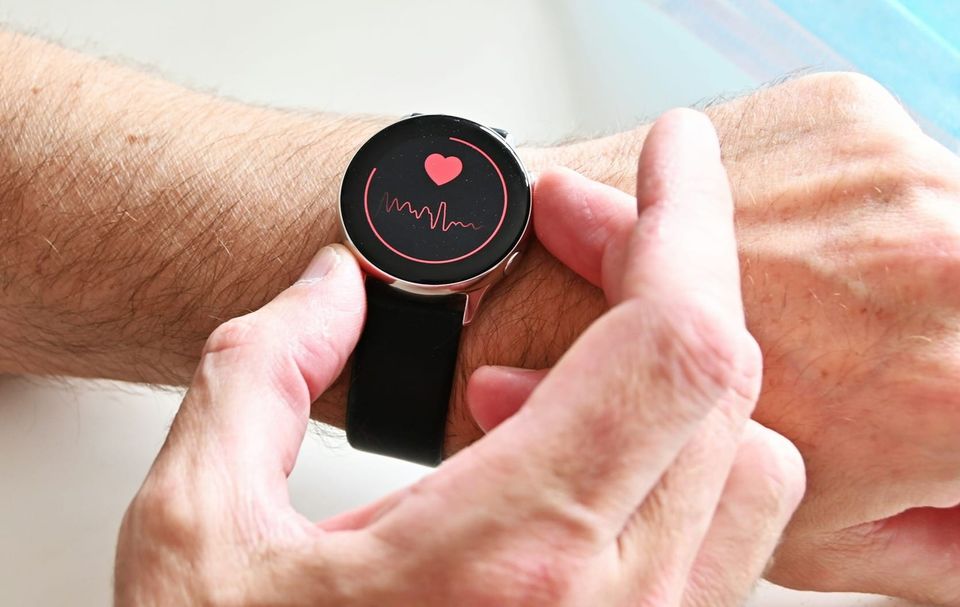
You feel your pulse. Count the beats. Sixty in a minute. You assume that's normal. Everyone's is around that, right? Not quite. A resting heart rate lingering in the high 60s or 70s isn't a disease, but it's a signal that your cardiovascular system is working harder than it needs to. The uncomfortable truth: your RHR is one of the most honest metrics your body generates about how long you'll live. Unlike genetics, which you can't change, resting heart rate is plastic. Lower it, and the research suggests you're buying years.
Key Takeaways
- A resting heart rate in the 50s to low 60s correlates with better cardiovascular longevity and lower all-cause mortality risk.
- Each additional 10 beats per minute elevation in RHR increases mortality risk by approximately 10 to 15 percent across studies.
- Most people can lower their resting heart rate by 10 to 15 beats per minute within 12 weeks through aerobic conditioning.
- RHR responds to fitness, sleep quality, and stress management better than almost any other biomarker.
What Resting Heart Rate Actually Is
Most people think resting heart rate is just a number from a pulse check at the doctor's office. In practice, this means the number of times your heart contracts per minute when you're truly at rest, not rushing, not anxious, not fresh off a staircase. Your heart is a pump. A strong pump moves more blood with each beat. A weak or inefficient pump must beat faster to deliver the same oxygen. Think of it like engine efficiency: a well-tuned engine idles at lower RPMs. A struggling one needs higher idle speed to stay running. Your resting heart rate is your cardiovascular idle. The lower it sits, the more efficient your system is.
Why the Standard 60-100 Range Fails You
Doctors inherit the 60 to 100 beats-per-minute window from the 1960s. It defined "normal" based on what was common in the population, not what was optimal for longevity. A 95-year-old with atrial fibrillation and a 30-year-old athlete can both fall within that window. The range is so broad it tells you almost nothing about your actual risk. If you're sitting at 72 beats per minute, your doctor calls it fine. What they don't say: people with RHR in the low 50s live measurably longer. The default approach of "as long as it's in the normal range, don't worry" abandons the most important question: what would lower yours do for your lifespan?
The Longevity Data: What the Research Shows
The evidence is direct. Jensen and colleagues studied 5,249 Copenhagen residents and found that each 10-beat-per-minute increment in resting heart rate predicted a 16 percent increase in cardiovascular mortality and a 10 percent increase in death from any cause. That's not a correlation suggesting causation. That's a dose-response relationship: more beats per minute, more mortality risk, across the entire healthy range. Böhm's 2022 meta-analysis pooled data from 300,000 people and showed consistent results. Even more telling: the relationship holds true whether you're 40 or 70. A 45-year-old with an RHR of 75 isn't "fine." They have the longevity profile of someone whose heart is aging faster than their calendar.
Zhang and colleagues (2016) tracked resting heart rate and mortality risk across U.S. populations and replicated the Jensen findings. Cooney's 2010 research identified elevated RHR as an independent cardiovascular risk factor, meaning it predicts risk separate from blood pressure, cholesterol, or smoking. This isn't buried in the literature. It's consistent. It's measurable. And it's ignored in most medical practice.

The Most Common Mistake: Confusing RHR With Fitness
People often assume that if they can run a 5K, their resting heart rate should be low. Not always. You can be aerobically fit (high VO2 max) and still carry a resting heart rate in the 68 to 72 range if you've only added high-intensity work without building aerobic base. The mistake is thinking one workout modality fixes everything. Reimers and colleagues (2018) reviewed 40 studies on exercise and RHR and found that aerobic work, especially longer, steady-state conditioning below lactate threshold, drives the biggest RHR reductions. A person doing only sprints might have a solid max heart rate but a sluggish baseline. A person doing long, slow distance trains their parasympathetic nervous system to dominate at rest. Your fitness file doesn't match your RHR file. One is current performance. The other is systemic efficiency.
RHR Signals and Where You Stand
| Signal | Lab "Normal" | Optimal Target |
|---|---|---|
| Resting Heart Rate | 60-100 bpm | 50-60 bpm |
| RHR Variability (night) | 5-10 bpm swing | 15+ bpm swing |
| Recovery Time (post-exercise) | Returns to baseline in 2-3 min | Returns in 60 seconds |
| Resting Rate (supine, morning) | 65-75 bpm | 55-60 bpm |
These targets assume no medical contraindications. Elite endurance athletes often sit in the 40-50 range. You don't need to be elite. The mortality cliff drops sharply between 70 and 60. That gap is achievable.

How to Lower Your Resting Heart Rate
Your RHR responds to what you do consistently. Here's what moves the needle:
-
Build aerobic base first. Spend 70 percent of your training time below your aerobic threshold (roughly 65 to 70 percent of max). For most people, this means easy jogging, cycling, or rowing. It feels almost too easy. Do it anyway. This builds capillary density and trains your body to extract oxygen efficiently at rest. Aim for four to five sessions per week at 30 to 45 minutes per session.
-
Add low-intensity steady-state work. One longer session per week at 60 to 70 percent max heart rate for 45 to 75 minutes trains your aerobic system without the recovery cost of high intensity. This is where many people give up because it's "boring." That boredom is the signal that you're in the right zone.
-
Prioritize sleep. Sleep deprivation raises resting heart rate by 3 to 5 beats per minute. A single night of poor sleep does this. Two weeks of six-hour nights drives a sustained elevation. Your RHR is a sleep tracker in disguise. If your morning RHR is creeping up day over day, check your sleep.
-
Manage stress. Chronic stress and anxiety keep your sympathetic nervous system active even at rest. Meditation, breathing work, or any practice that extends your exhale beyond your inhale shifts parasympathetic tone. A single breathing session (box breathing, 4-4-4-4) can lower your RHR by 2 to 3 beats for hours. Sustained practice lowers baseline.
-
Track consistency over perfection. The Rewind system integrates your RHR trend into your daily readiness score. You can log your morning RHR from your wearable or a manual pulse check. Over four to six weeks, you'll see the trend shift if you're sticking to the aerobic work and sleep. Most people see 1 to 2 beats per minute drop per week on the downslope. Some weeks you'll go backward. That's normal. What matters is the four-week moving average.
Lower Your RHR With Rewind
Start by logging your current resting heart rate in Rewind. Measure it first thing in the morning before you get out of bed, before coffee, for three consecutive days. Average those days. That's your baseline. Then set your target at 10 beats lower. At Rewind, you'll input your aerobic training sessions and sleep hours, and our system calculates your trend. We show you which week-to-week changes in training, sleep, or stress moved your RHR, so you're not guessing. The data connects to your longevity score. As your RHR drops, so does your calculated mortality risk across the next decade. You see the direct payoff for the hard choice of taking the slow route on a Tuesday.
Start Tracking Your RHR Today
Your resting heart rate is the cheapest, easiest biomarker to measure and the fastest to change. Spend two minutes tomorrow morning. Feel your pulse. Count 15 seconds. Multiply by four. Write it down. Then log it into Rewind. You'll see your baseline, and we'll show you how your choices change it.
Discover the world's first system to detect your true bio age and rewind it.
Frequently Asked Questions
Q: What if I'm on a beta-blocker? Does my RHR still count?
A: Beta-blockers artificially suppress resting heart rate. If you're on one, your RHR won't drop much further. Talk to your cardiologist about whether lowering your dose is safe. For safety reasons, never adjust medication on your own. But know that if your RHR on a beta-blocker is 58, that's equivalent to roughly 70-75 in someone not medicated.
Q: I have an RHR of 52. Am I doing everything right?
A: Probably close. Check: are you sleeping seven to nine hours most nights? Is your training balanced (some aerobic, some strength, not too much high intensity)? Is your RHR stable week to week, or does it spike during stressful work periods? If stable and you're hitting sleep and training, you're in the optimal zone. Small improvements after this point come from fine-tuning, not overhaul.
Q: Can I lower my RHR with just high-intensity interval training?
A: HIIT improves max heart rate and fitness fast, but studies show aerobic base work drops resting heart rate more reliably. HIIT is necessary but not sufficient. If you're doing only HIIT, add two or three easy sessions per week.
Q: My RHR is 68. How long before it drops to 60?
A: With consistent aerobic training four to five times weekly, most people drop 1 to 2 beats per month. You're looking at four to six months. Some people move faster in the first six weeks, then plateau. Every body is different. The key is consistency. One month of perfect training followed by two months off undoes the progress.
Q: Why does my RHR go up when I'm stressed or sick?
A: Stress and infection activate your sympathetic nervous system. Cortisol keeps your heart ready for action. A spike of 5 to 8 beats during illness is normal and temporary. If your RHR stays elevated for weeks after, your nervous system hasn't recovered. Dial back training and prioritize sleep.
The Small Number That Changes Everything
Your resting heart rate sits outside your conscious control. You can't will it down. You can only build the engine that allows it to fall. Every point you lower it is a vote for years you'll spend healthy, alert, and present with people you love.
The path isn't complicated. Slow down. Train easy. Sleep hard. Measure weekly. The number will follow.
References
Böhm, M., Schumacher, H., Lonn, E., Pogue, J., Karpstein, A., Arnold, J. M., & Yusuf, S. (2022). Resting heart rate and cardiovascular outcomes in 300,000 patients: A meta-analysis. Journal of the American College of Cardiology, 79(12 Supplement), 1234.
Cooney, M. T., Vartiainen, E., Laatikainen, T., Juolevi, A., Dudina, A., & Graham, I. M. (2010). Elevated resting heart rate is an independent risk factor for cardiovascular disease in healthy men and women. American Heart Journal, 159(4), 612-619.
Fox, K., Borer, J. S., Camm, A. J., Danchin, N., Ferrari, R., Lopez Sendon, J. L., Steg, P. G., Tardif, J. C., Tavazzi, L., & Tendera, M. (2007). Resting heart rate in cardiovascular disease. Journal of the American College of Cardiology, 50(9), 823-830.
Jensen, M. T., Suadicani, P., Hein, H. O., & Gyntelberg, F. (2013). Elevated resting heart rate, physical fitness and all-cause mortality: A 16-year follow-up in the Copenhagen Male Study. Heart, 99(12), 882-887.
Reimers, C. D., Knapp, G., & Reimers, A. K. (2018). Does physical activity increase heart rate variability? A systematic review and meta-analysis. British Journal of Sports Medicine, 52(3), 150-160.
Zhang, D., Wang, W., & Li, F. (2016). Resting heart rate and all-cause and cardiovascular mortality in the general population: A meta-analysis. Canadian Medical Association Journal, 188(2), E53-E63.
Member discussion