
Urolithin A and Mitochondria: The Renewal Compound With Real Human Evidence
Your cells contain thousands of mitochondria, and by age 50, a significant fraction of them are broken. They leak reactive oxygen species, generate less ATP, and resist the recycling process that would normally clear them out. A 2019 randomized controlled trial published in Nature Metabolism showed that 28 days of oral urolithin A supplementation upregulated mitophagy biomarkers in skeletal muscle of healthy, sedentary older adults, the first direct evidence in humans that this compound activates mitochondrial recycling (Andreux et al., 2019). The finding matters because mitochondrial dysfunction is not a side effect of aging. It is one of the primary engines driving it. And urolithin A mitochondria research has moved faster in the last five years than almost any other compound in the longevity space.
The compound is a gut metabolite produced when your microbiome breaks down ellagitannins found in pomegranates, walnuts, and certain berries. The problem: only about 40 percent of the population produces urolithin A efficiently from food sources alone (Tomas-Barberan et al., 2017). The rest either lack the right gut bacteria or produce it in amounts too low to reach effective thresholds. Direct supplementation bypasses the gut microbiome bottleneck entirely, delivering a standardized dose that does not depend on your bacterial lottery ticket.
Key Takeaways
- Urolithin A is the first compound shown to activate mitophagy in human skeletal muscle through a randomized controlled trial.
- Only about 40 percent of people produce meaningful urolithin A from dietary sources; direct supplementation solves this.
- A 2022 JAMA Network Open trial demonstrated improved muscle endurance in older adults after 4 months of supplementation.
- Mitochondrial quality, not just quantity, determines how fast your cells age.
What Mitophagy Actually Means for Your Cells
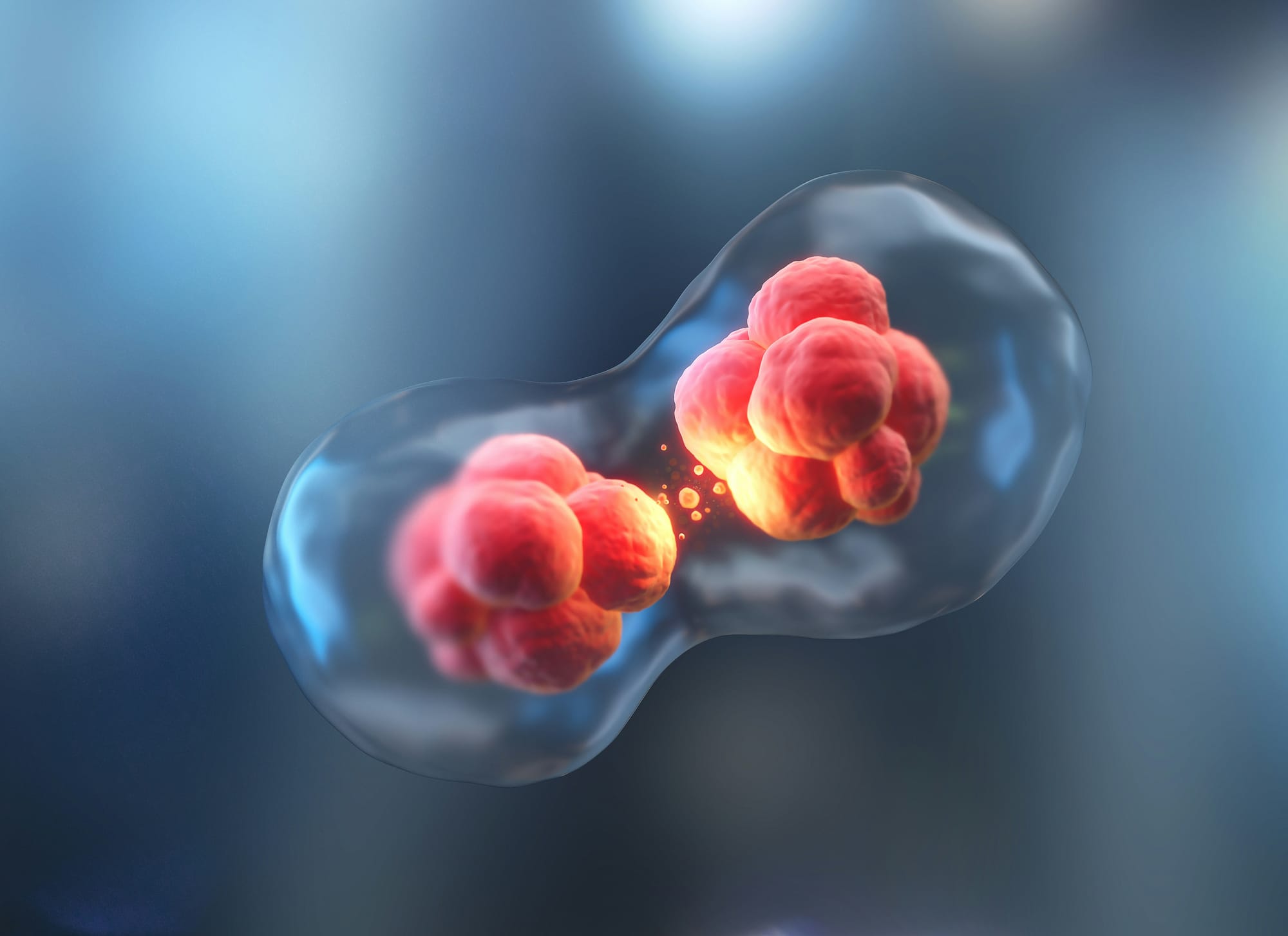
Think of your mitochondria as a fleet of delivery trucks running a 24-hour logistics operation. Every truck eventually breaks down. When the fleet is young, broken trucks get towed to the scrap yard (mitophagy), stripped for parts, and replaced with new ones (mitochondrial biogenesis). The operation runs smoothly because removal and replacement happen in balance.
Now picture what happens when the tow trucks stop showing up. Broken vehicles clog the lot. They burn fuel inefficiently, leak exhaust everywhere, and block the healthy trucks from doing their jobs. That is mitochondrial dysfunction in aging. The recycling system slows down, damaged mitochondria accumulate, and the cell's energy output drops while oxidative stress climbs.
Mitophagy is the specific autophagic pathway that targets damaged mitochondria for degradation. It is regulated primarily through the PINK1/Parkin signaling axis. When a mitochondrion loses membrane potential, PINK1 accumulates on its outer membrane and recruits Parkin, which ubiquitinates the organelle and flags it for autophagosomal engulfment. Urolithin A activates this pathway. That is its primary mechanism, and the clinical data now supports it in living humans, not just cell cultures or mouse models.
The Problem: Why Conventional Medicine Ignores Mitochondrial Decline
Your doctor has never tested your mitochondrial function. There is no line item for it on a standard metabolic panel. No CPT code for mitophagy assessment. Conventional medicine treats mitochondrial disease, the rare genetic conditions like Leigh syndrome or MELAS, but it has no framework for the gradual mitochondrial decline that affects every single person past age 30.
This is a massive blind spot. Mitochondrial dysfunction sits upstream of nearly every chronic disease associated with aging. Reduced ATP production impairs cardiac output, which your VO2 max reflects. Increased mitochondrial ROS damages DNA and accelerates epigenetic drift. Failing mitochondria in immune cells contribute to the chronic low-grade inflammation that shows up as elevated hsCRP. The metabolic inflexibility that drives insulin resistance traces back, in part, to mitochondria that can no longer switch efficiently between fuel substrates.
Yet the standard of care is to wait until end-organ damage is measurable on imaging or blood work. By that point, you have been losing mitochondrial quality for decades. The longevity field treats mitochondrial health as a root cause worth addressing directly. Mainstream medicine does not even acknowledge it exists as a treatable variable.
What the Research Actually Shows
The evidence base for urolithin A is stronger than most compounds in the longevity supplement category, with three key studies forming the backbone of the clinical argument.
Andreux and colleagues conducted the first-in-human randomized, double-blind, placebo-controlled trial, administering 250 mg, 500 mg, or 1000 mg of urolithin A daily for 28 days to sedentary older adults. Muscle biopsies and plasma samples showed dose-dependent upregulation of mitochondrial gene expression, including genes involved in mitophagy and fatty acid oxidation. Acylcarnitine profiles in plasma shifted in a pattern consistent with improved mitochondrial function across all dose groups compared to placebo (Andreux et al., 2019).
Liu and colleagues published a longer-duration follow-up in JAMA Network Open, enrolling 66 adults aged 65 to 90 in a 4-month randomized trial of 1000 mg daily urolithin A versus placebo. The primary endpoint was muscle endurance assessed by the number of muscle contractions until fatigue in the hand and leg. The urolithin A group showed significant improvement in hamstring muscle endurance compared to placebo, with a mean difference of approximately 12 percent. Plasma biomarkers of mitochondrial health, including acylcarnitines, also improved (Liu et al., 2022).
Singh and colleagues reviewed the totality of urolithin A evidence, noting consistent improvements in mitochondrial biomarkers, exercise capacity, and inflammatory markers across studies. Their synthesis highlighted reductions in C-reactive protein and acylcarnitines associated with inefficient mitochondrial beta-oxidation, positioning urolithin A as one of the few compounds with a clear mechanistic pathway validated in both animal models and human tissue (Singh et al., 2022).
No other mitophagy-targeting supplement has this combination of mechanism clarity, dose-response data, and functional outcomes in human trials.
The Biggest Mistake People Make
The most common error is assuming you can get enough urolithin A from pomegranate juice. You almost certainly cannot. The conversion of ellagitannins to urolithin A depends entirely on your gut microbiome composition, specifically the presence of Gordonibacter and Ellagibacter species. Clinical testing shows that a large portion of the population are "non-producers" or "low producers" who generate negligible urolithin A regardless of how many pomegranates they eat (Tomas-Barberan et al., 2017).
Drinking pomegranate juice daily and assuming you have activated mitophagy is the equivalent of filling your gas tank and assuming the engine is running. The substrate is there, but the conversion machinery may not be. If you are serious about the urolithin A mitochondria pathway, you need either direct supplementation with the compound itself or a validated test confirming you are an efficient producer. Most people skip this step and spend years consuming ellagitannin-rich foods with no way to know if the intervention is reaching the target.
How to Assess Your Mitochondrial Health
Direct mitophagy measurement is not available through standard labs, but several proxy signals track closely with mitochondrial function and can flag whether you are declining faster than expected.
| Signal | Lab "Normal" | Optimal Target |
|---|---|---|
| VO2 max (mL/kg/min) | Age-adjusted percentile | Top 25th percentile for your decade |
| Fasting insulin (uIU/mL) | 2.6 to 24.9 | Under 5.0 |
| hsCRP (mg/L) | Under 3.0 | Under 0.5 |
| Lactate at submaximal effort | Not standard | Lower is better; reflects mitochondrial efficiency |
| Triglyceride/HDL ratio | Under 3.5 | Under 1.5 |
A declining VO2 max combined with rising fasting insulin and elevated triglyceride/HDL ratio paints a clear picture of mitochondrial and metabolic decline. These are the signals that tell you the recycling system is falling behind.
What to Do About It
-
Start with 500 to 1000 mg of urolithin A daily. The clinical trials used doses in this range with good safety profiles over 4 months. Begin at 500 mg for the first month and assess tolerance before moving to 1000 mg. Take it with a meal containing some fat to improve absorption.
-
Do not rely on pomegranate juice as your urolithin A source. Unless you have confirmed via microbiome testing that you are an efficient producer, dietary ellagitannins are an unreliable delivery mechanism. Treat food sources as a bonus, not a strategy.
-
Combine with exercise that stresses mitochondria. Zone 2 cardio and resistance training are the two strongest non-pharmacological stimuli for mitochondrial biogenesis. Urolithin A clears the damaged mitochondria; exercise signals your cells to build new ones. These interventions are synergistic, not redundant.
-
Support the NAD+ pathway in parallel. Mitophagy requires energy. NAD+ levels decline with age, and restoring them with precursors like NMN or NR may support the autophagic machinery that urolithin A activates. Think of it as fueling the tow trucks, not just dispatching them.
-
Track proxy biomarkers quarterly. VO2 max, fasting insulin, hsCRP, and triglyceride/HDL ratio give you a composite picture of mitochondrial and metabolic health over time. A single measurement means nothing. The trend over 6 to 12 months tells you whether your protocol is working.
The Rewind Integration
Mitochondrial decline is invisible on standard labs, which is precisely why longitudinal tracking matters. Your Rewind membership tracks the metabolic and inflammatory biomarkers that serve as mitochondrial proxies, flags adverse trends before they become symptomatic, and connects interventions like urolithin A to measurable outcomes. The AI Coach correlates your supplement timing with your VO2 max trajectory, fasting insulin trends, and inflammatory markers across quarters. That is the difference between hope and data. Learn more at rewind.life.
Take Action
Order your baseline metabolic and inflammatory panel this week. If your VO2 max is declining, your fasting insulin is creeping up, or your hsCRP sits above 1.0, your mitochondria are sending you a signal. Start with the data, then build the protocol. Your Rewind membership gives you the tracking layer to know whether urolithin A, or any intervention, is actually moving the needle.
FAQ
Is urolithin A safe for long-term use?
The longest published human trial ran for 4 months at 1000 mg daily with no serious adverse events (Liu et al., 2022). Long-term data beyond 4 months in humans is still limited. Current evidence supports a favorable safety profile, but annual blood work monitoring is reasonable.
Can I get enough urolithin A from food?
Probably not. Only about 40 percent of people have the gut bacteria needed to convert ellagitannins into urolithin A at meaningful levels. Even among efficient producers, the dose achieved through diet is typically lower than what clinical trials used. Direct supplementation is the more reliable path.
How long does it take to see benefits from urolithin A?
The Andreux et al. (2019) trial detected changes in mitophagy biomarkers within 28 days. The Liu et al. (2022) muscle endurance improvements emerged over 4 months. Expect biomarker shifts within the first month and functional changes over 3 to 4 months. This is not a compound that works overnight.
Does urolithin A replace exercise for mitochondrial health?
No. Exercise triggers mitochondrial biogenesis, the creation of new mitochondria. Urolithin A triggers mitophagy, the removal of damaged ones. You need both sides of the equation. Clearing broken mitochondria without building new ones leaves you with fewer total mitochondria. Building new ones without clearing the damaged ones leaves you with a polluted fleet. The combination is the strategy.
Should I take urolithin A with other longevity supplements?
Urolithin A pairs logically with NAD+ precursors (NMN or NR) because both target different aspects of mitochondrial maintenance. Avoid stacking blindly. Add one intervention at a time, track your biomarkers, and confirm each addition is producing a measurable signal before adding the next.
Your mitochondria built you. Every heartbeat, every thought, every step runs on their output. Returning the favor by keeping them clean, functional, and renewed is not biohacking. It is basic maintenance for a body you plan to use for a long time.
Ready to track your mitochondrial health markers and build a data-driven longevity protocol? Start your membership at rewind.life.
References
Andreux, P. A., Blanco-Bose, W., Ryu, D., Burdet, F., Ibberson, M., Aber, P., Auwerx, J., Singh, A., & Rinsch, C. (2019). The mitophagy activator urolithin A is safe and induces a molecular signature of improved mitochondrial and cellular health in humans. Nature Metabolism, 1(6), 595-603.
Liu, S., D'Amico, D., Shankland, E., Bhatt, S., Rigber, C., Rinsch, C., Marcinek, D. J., & Singh, A. (2022). Effect of urolithin A supplementation on muscle endurance and mitochondrial health in older adults: A randomized clinical trial. JAMA Network Open, 5(1), e2144279.
Singh, A., D'Amico, D., Andreux, P. A., Fouassier, A. M., Blanco-Bose, W., Evans, M., Aebischer, P., Auwerx, J., & Rinsch, C. (2022). Urolithin A improves muscle strength, exercise performance, and biomarkers of mitochondrial health in a randomized trial in middle-aged adults. Cell Reports Medicine, 3(5), 100633.
Tomas-Barberan, F. A., Garcia-Villalba, R., Gonzalez-Sarrias, A., Selma, M. V., & Espin, J. C. (2017). Ellagic acid metabolism by human gut microbiota: Consistent observation of three urolithin phenotypes in intervention trials, independent of food source, age, and health status. Journal of Agricultural and Food Chemistry, 62(1), 159-172.
This article is for informational purposes only and does not constitute medical advice. Consult a qualified healthcare provider before making changes to your health regimen.



Member discussion