
Postprandial Glucose Spikes: What Your Blood Sugar After Meals Reveals About Aging
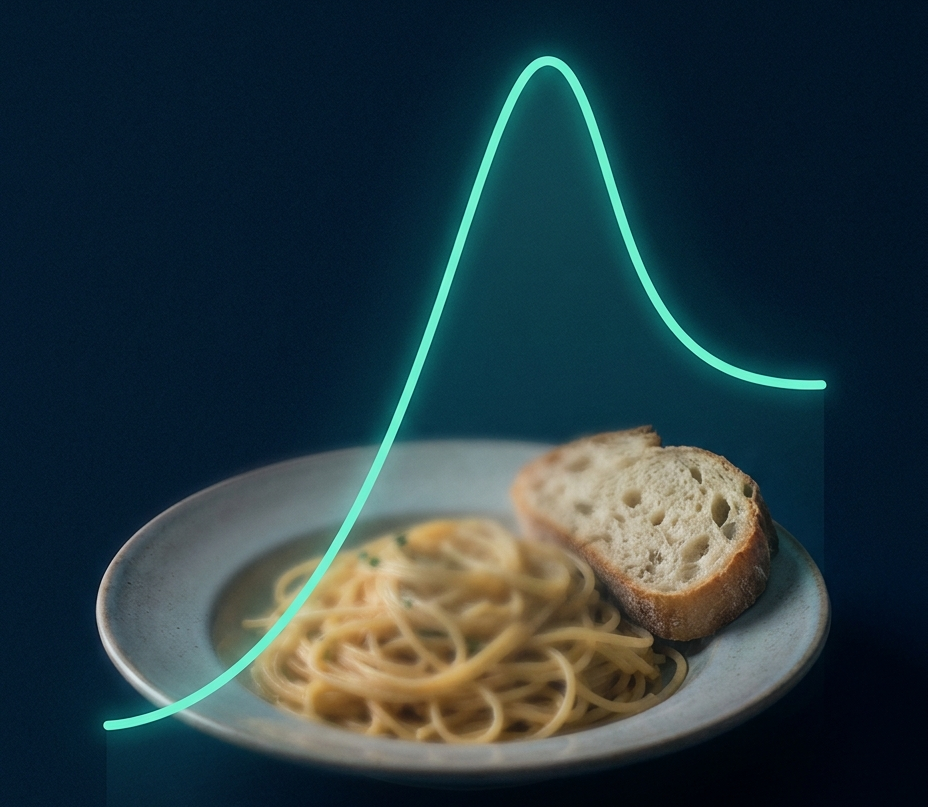
Your fasting glucose came back at 92 mg/dL. Your doctor said it was normal. Two hours after lunch, your blood sugar hit 164 mg/dL, and nobody measured it. That post-meal spike, invisible on every standard lab panel, drives more oxidative damage to your blood vessels than the fasting number most people obsess over. A 2023 CGM study of metabolically healthy adults found that their average post-meal glucose peak was just 99 mg/dL (O'Brien et al., 2023, n=7,929). If yours regularly crosses 140, something is already shifting, even if your fasting labs look clean.
Postprandial glucose is the concentration of sugar in your blood in the 1 to 3 hours after eating, and it is the metabolic signal most people over 40 never see.
Key Takeaways
- Post-meal glucose spikes above 140 mg/dL damage blood vessels and accelerate aging, even in non-diabetics.
- Fasting glucose misses the problem entirely; your metabolic health plays out after meals.
- Meal order (vegetables first, carbs last) can reduce post-meal spikes by 30 to 40%.
- Healthy adults average a 99 mg/dL post-meal peak; anything consistently above 120 warrants attention.
What Postprandial Glucose Actually Means
Postprandial glucose is your blood sugar measured after eating, typically at the 1 or 2 hour mark. Think of it as the stress test for your metabolic system. Fasting glucose tells you what your engine does at idle. Postprandial glucose tells you what happens when you hit the accelerator.
Most people think their metabolism is fine because their fasting glucose is under 100. In practice, this means they have never seen the spike that follows a bowl of pasta or a sandwich. The International Diabetes Federation sets 140 mg/dL as the upper threshold for a normal post-meal response. But data from continuous glucose monitors in healthy populations suggests the real target is much lower. O'Brien and colleagues found that metabolically healthy adults without diabetes averaged a post-meal peak of 99 mg/dL, with 95th percentile values around 121 mg/dL (O'Brien et al., 2023).
The gap between "clinically normal" and "actually healthy" is where the damage accumulates.
Why Fasting Glucose Gives You a False Sense of Security
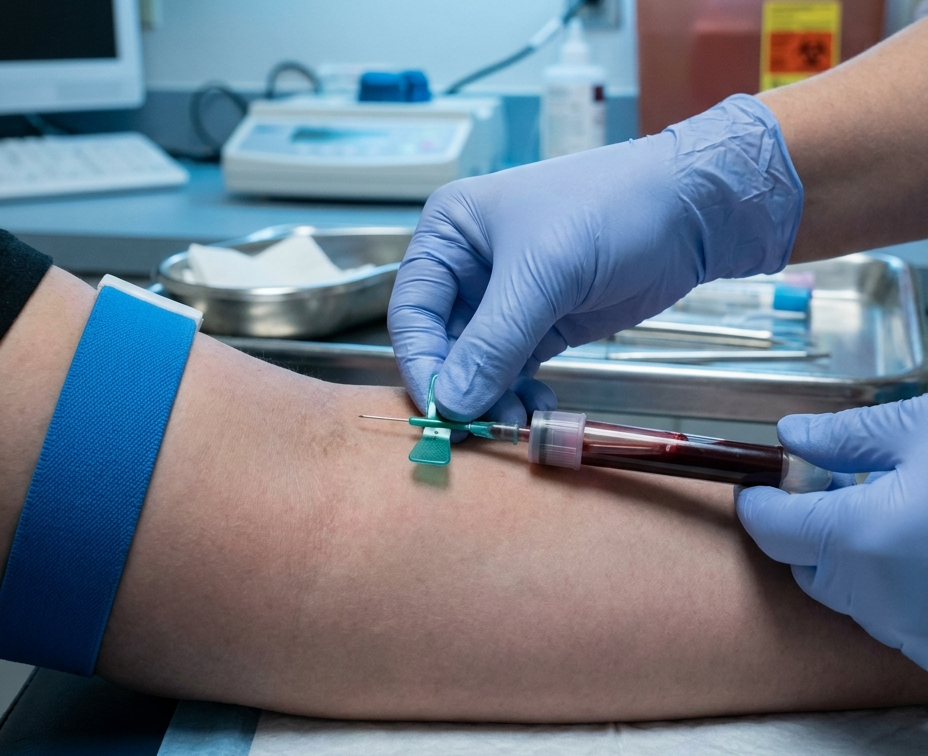
Standard metabolic testing is built around fasting. You skip breakfast, get your blood drawn, and receive a number that represents the lowest point of your daily glucose curve. It is like judging a city's traffic by measuring it at 3 a.m.
Fasting glucose can remain below 100 mg/dL for years while post-meal spikes climb steadily into the 140 to 180 range. This pattern, sometimes called "isolated postprandial hyperglycemia," is common in people with early insulin resistance, and it predicts cardiovascular events independently of fasting numbers (Ceriello et al., 2020). Prospective cohort studies show that the height and duration of post-meal glucose peaks predict carotid intima thickening and future cardiovascular events even when fasting markers look normal.
The mechanism is not subtle. Each glucose spike triggers a burst of reactive oxygen species in the endothelial cells lining your blood vessels. This oxidative stress is proportional to the size of the spike. A jump from 90 to 160 mg/dL does more vascular damage than a steady 130 mg/dL, even though the average is lower in the first case. The oscillation itself is the problem (Ceriello et al., 2020).
After 40, this matters more. Your endothelial repair mechanisms slow. The cumulative micro-damage from thousands of post-meal spikes starts to compound in ways that fasting glucose never reflects.
The Meal Composition Mistake
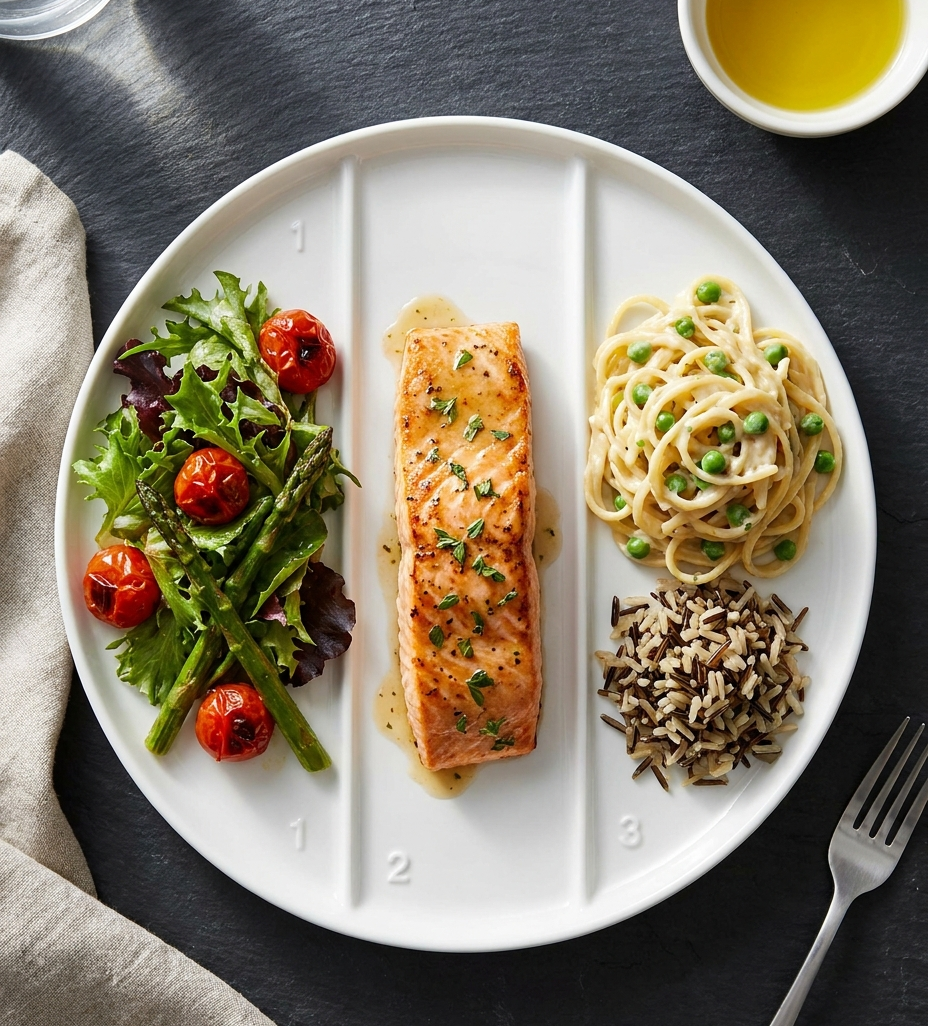
The single biggest driver of exaggerated post-meal glucose is eating refined carbohydrates first or alone. A bagel on an empty stomach, rice without protein, fruit juice between meals. The speed at which glucose enters the bloodstream depends on what else is in the stomach to slow absorption.
O'Keefe and colleagues showed that low glycemic index foods, vegetables, lean protein, nuts, and vinegar each significantly reduce post-meal glucose and inflammation (O'Keefe et al., 2008). The effect is not small. Eating fiber and protein before carbohydrates in the same meal can reduce the glucose peak by 30 to 40%, without changing what you eat, only the order.
Most people know this conceptually. Almost nobody does it consistently. The next time you sit down to a meal, eat the vegetables and protein first. Finish with the starch. This is the highest leverage dietary change you can make for post-meal glucose, and it costs nothing.
Numbers Worth Watching After Every Meal
| Signal | Lab "Normal" | Optimal Target |
|---|---|---|
| 1 hour post-meal glucose | Under 180 mg/dL | Under 120 mg/dL |
| 2 hour post-meal glucose | Under 140 mg/dL | Under 100 mg/dL |
| Glucose excursion (delta from fasting) | Under 50 mg/dL | Under 30 mg/dL |
| Fasting glucose | 70 to 100 mg/dL | 75 to 90 mg/dL |
| HbA1c | Under 5.7% | Under 5.2% |
Read these together. A fasting glucose of 88 with a 1 hour post-meal reading of 155 tells a different story than a fasting glucose of 88 with a post-meal peak of 108. The fasting number is the same. The metabolic trajectory is not.

What to Do About Post-Meal Glucose Spikes
-
Eat protein and fiber before carbohydrates at every meal. Start with vegetables or salad, then protein, then starches and grains last. Research consistently shows this sequence blunts the glucose spike by 30 to 40% compared to eating carbs first (O'Keefe et al., 2008). Make it the default. No calorie counting required.
-
Walk for 10 to 15 minutes after your largest meal. A short post-meal walk activates skeletal muscle glucose uptake through a pathway that does not require insulin (GLUT4 translocation). Studies show even light walking reduces the post-meal glucose peak by 20 to 30%. After dinner is the highest leverage window.
-
Test your own response to meals you eat regularly. A 2 week CGM wear gives you a map of exactly which meals spike you and which do not. You will almost certainly discover that one or two staple meals produce disproportionate spikes. This data eliminates guesswork. Without it, you are managing a variable you cannot see.
-
Add vinegar or lemon juice to meals containing starch. 1 to 2 tablespoons of apple cider vinegar or lemon juice taken with a starchy meal slows gastric emptying and reduces the glucose peak. The effect is modest, around 10 to 15%, but it stacks with the other interventions.
-
Replace liquid carbohydrates with whole food sources. Juice, smoothies with fruit concentrate, sweetened coffee drinks, and soda bypass the normal digestive buffering that slows glucose absorption. Whole fruit with its intact fiber produces a fundamentally different glucose curve than the same fruit blended or juiced.
This is exactly the kind of metabolic signal Rewind tracks. We monitor your glucose patterns alongside your recovery data so you can see how meals, movement, and sleep interact in your own body, without assembling the picture from 5 different apps.
Map Your Post-Meal Glucose
Your fasting labs are a snapshot. Your post-meal response is the movie. If you are serious about metabolic health after 40, you need to see both.
Start tracking your metabolic health with Rewind.
FAQ
What is a normal blood sugar level 2 hours after eating?
For someone without diabetes, blood sugar should return to near fasting levels, under 100 mg/dL, by the 2 hour mark. The clinical threshold is 140 mg/dL, but CGM data from healthy adults shows most peak well below that. Consistent readings above 120 at 2 hours suggest early insulin resistance worth investigating.
Can you have dangerous glucose spikes without being diabetic?
Yes. Isolated postprandial hyperglycemia, where fasting glucose looks normal but post-meal levels spike above 140 to 160 mg/dL, is common in early insulin resistance and independently predicts cardiovascular disease (Ceriello et al., 2020). You will not catch it on a standard fasting panel.
Does walking after meals really lower blood sugar?
It does. Walking for 10 to 15 minutes after eating activates glucose uptake in skeletal muscle through pathways that work independently of insulin. Studies consistently show a 20 to 30% reduction in the post-meal glucose peak. Even a slow walk counts. Timing matters more than intensity.
How do I know which foods spike my blood sugar the most?
Wearing a continuous glucose monitor for 2 weeks gives you a direct readout of how each meal affects your glucose. Without a CGM, you can use a standard glucometer to test at 1 hour and 2 hours after meals you eat often. Most people discover that 2 or 3 staple meals are responsible for the majority of their spikes.
Post-meal glucose is the metabolic variable most people never measure and the one most likely to be silently driving vascular damage after 40. Fasting labs catch the problem years too late. By the time fasting glucose rises, the post-meal pattern has been doing damage for a decade.
You do not need to overhaul your diet to fix post-meal glucose. Eat the same meals in a different order. Walk after dinner. Test your own responses instead of guessing. The interventions are simple. The hard part was never seeing the number in the first place.
See how Rewind connects your metabolic data to your longevity plan.
References
Ceriello, A., Gallo, M., Aroda, V. R., De Block, C., Schnell, O., Sposato, B., & Raz, I. (2020). Postprandial glucose spikes, an important contributor to cardiovascular disease in diabetes? Frontiers in Cardiovascular Medicine, 7, 570553. https://doi.org/10.3389/fcvm.2020.570553
O'Brien, C. M., Ntoumanis, N., Plotnikoff, R. C., Horton, E. S., Johnson, N. A., Olive, L. S., Shaw, J. E., Simmons, D., Skinner, T., Sturt, J. A., et al. (2023). Continuous glucose monitoring in a healthy population: Understanding the post-prandial glycemic response in individuals without diabetes mellitus. Metabolism: Clinical and Experimental, 146, 155640. https://doi.org/10.1016/j.metabol.2023.155640
O'Keefe, J. H., Gheewala, N. M., & O'Keefe, J. O. (2008). Dietary strategies for improving post-prandial glucose, lipids, inflammation, and cardiovascular health. Journal of the American College of Cardiology, 51(3), 249-255. https://doi.org/10.1016/j.jacc.2007.10.016


Member discussion