
Longevity Exercise: How Much You Need to Shift Your Health Trajectory

A 45-year-old runner drops dead at mile 18 of a marathon. The headlines scream that exercise kills. Meanwhile, across town, a sedentary office worker quietly develops metabolic syndrome, insulin resistance, and arterial plaque that will shave a decade off her life. Nobody writes that headline. The truth about longevity exercise, how much you actually need, sits in a place most people never look: the dose-response curve buried in massive epidemiological studies. And that curve tells a story the fitness industry and your doctor probably haven't shared with you. Forty-two minutes a day. That's the number that keeps showing up when researchers analyze hundreds of thousands of people over decades. Not two hours. Not ten minutes. Roughly 42 minutes of moderate-to-vigorous activity, most days of the week, lands you in the zone where mortality risk drops most dramatically.
Why This Number Matters More Than You Think
You already know exercise is good for you. That's not the conversation worth having. The real question is whether you're leaving years on the table by under-dosing or mis-dosing your movement. Most adults fall into one of two camps: they do almost nothing, or they grind through the same routine without understanding where the biggest returns actually live. The exercise longevity threshold isn't about perfection. It's about precision. Get the dose right and you unlock benefits that no pill, supplement, or biohack can replicate. Your inflammatory markers drop, your cardiovascular risk profile improves, and your body composition shifts in ways that compound over decades.
Key Takeaways
- The optimal exercise for lifespan is 3 to 5 times the minimum guideline, roughly 450 to 750 minutes of moderate activity per week, which translates to about 42 minutes daily of brisk movement.
- Resistance training independently reduces all-cause mortality by up to 21%, and most people skip it entirely.
- The exercise dose-response mortality curve is not linear. The biggest gains come from moving out of the sedentary category; additional gains flatten but never fully reverse until extreme volumes.
- Combining cardio and resistance training outperforms either one alone for longevity outcomes.
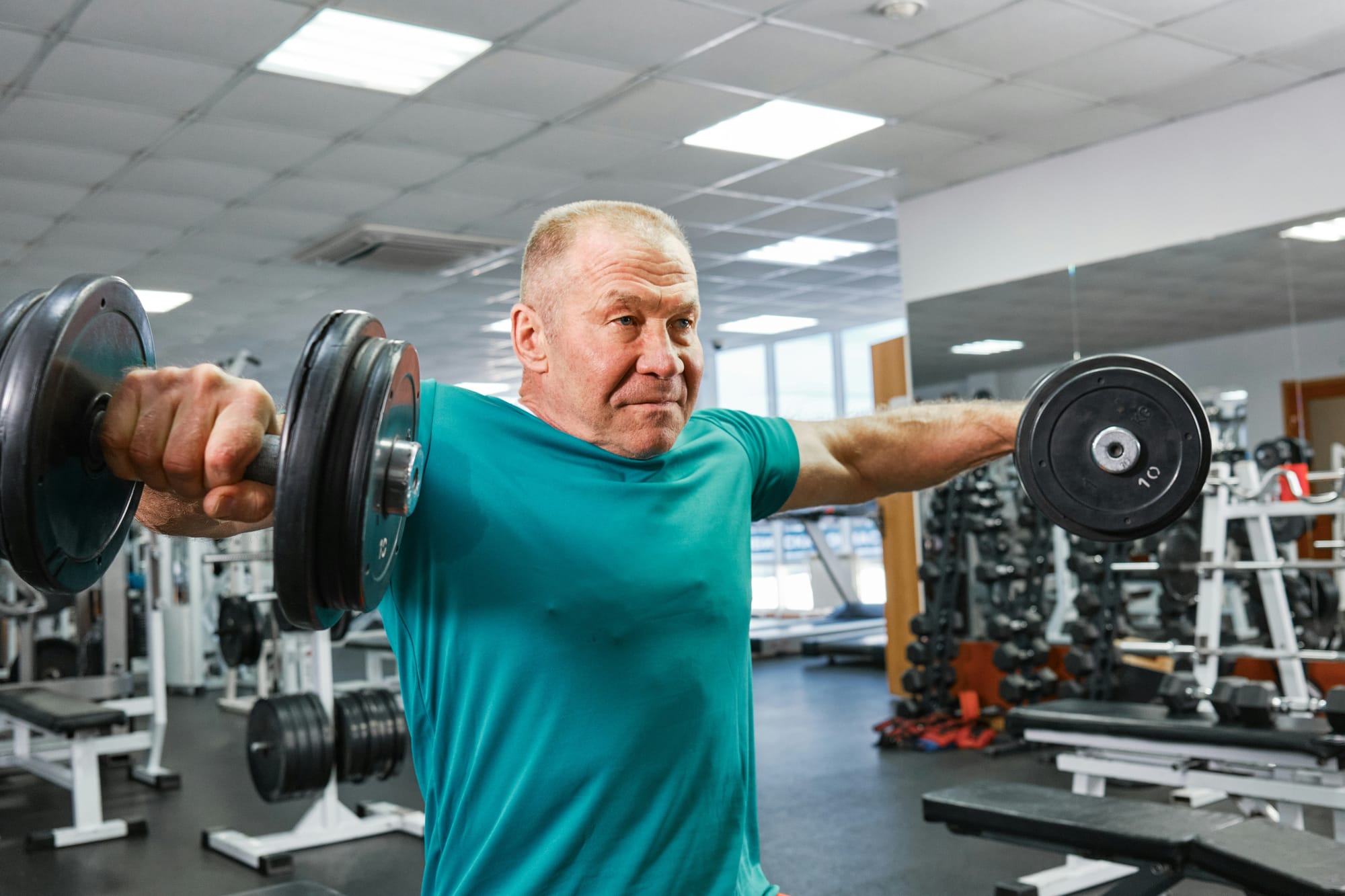
What "Exercise Dose" Actually Means
When researchers talk about exercise and lifespan, they don't count gym selfies. They measure metabolic equivalents, or METs, multiplied by hours per week. One MET is the energy you burn sitting still. Walking briskly clocks in around 3.5 METs. Running at a 10-minute mile pace hits roughly 10 METs. A MET-hour captures both intensity and duration in a single number.
The U.S. Department of Health recommends a minimum of 7.5 MET-hours per week. That's 150 minutes of moderate activity, the baseline you've heard a thousand times. But "minimum" and "optimal" are not the same word. Researchers studying how much exercise to live longer have found that the sweet spot sits dramatically higher than that floor, closer to 22 to 40 MET-hours weekly. In practical terms, that's 300 to 750 minutes of moderate exercise, or substantially less time if you increase intensity.
Think of it like a medication. Your doctor wouldn't prescribe half the effective dose of a statin and call it good enough. Exercise deserves the same rigor.
The Problem: What Conventional Medicine Gets Wrong
The 150-minute guideline is a public health floor designed for the most sedentary populations. It's the dose that moves someone from "dangerously inactive" to "slightly less likely to die prematurely." That's a worthy goal. But somewhere along the way, the floor became the ceiling. Doctors tell patients to "get 30 minutes most days" and check the box. No progression plan. No intensity targets. No mention of resistance training. No VO2 max benchmarking.
This is like telling a patient with a cholesterol level of 300 to "eat a little better" without specifying what, how much, or when to recheck. Exercise is the single most potent intervention for all-cause mortality reduction, yet the medical system treats it as an afterthought, a lifestyle recommendation rather than a precise prescription.
The other failure is ignoring exercise type. Cardio dominates the conversation. Resistance training barely registers in most clinical encounters, despite a growing body of evidence that muscle mass and strength are independent predictors of survival. If your doctor has never asked about your squat or deadlift frequency, you're getting incomplete advice.
What the Research Actually Shows
Three landmark studies paint a clear picture of the exercise dose-response mortality relationship.
Arem and colleagues pooled data from six prospective cohort studies involving 661,137 men and women, tracking mortality outcomes over a median follow-up of 14.2 years. They found that people meeting the minimum guideline of 7.5 MET-hours per week had a 20% lower risk of mortality compared to inactive individuals. But the real finding was higher on the curve: those achieving 3 to 5 times the minimum recommendation, 22.5 to 40 MET-hours weekly, experienced a 39% lower mortality risk. That upper range translates to roughly 450 to 750 minutes of moderate activity per week, or about 42 minutes of vigorous activity daily. Even at 10 times the minimum, there was no evidence of increased mortality (Arem et al., 2015).
Lee and colleagues followed approximately 100,000 U.S. adults for over 30 years as part of the Nurses' Health Study and Health Professionals Follow-Up Study. Their analysis, published in Circulation, confirmed a strong inverse relationship between long-term physical activity and both all-cause and cardiovascular mortality. Participants who performed 150 to 300 minutes per week of vigorous activity, or 300 to 600 minutes of moderate activity, saw mortality reductions of 21% to 31%. Those who exceeded the upper end of these ranges saw additional, though smaller, benefits with no sign of harm at high volumes (Lee et al., 2022).
On the resistance training side, Zhao and colleagues conducted a systematic review and meta-analysis of 11 prospective cohort studies. Their findings, published in the British Journal of Sports Medicine, revealed that resistance training was associated with a 21% reduction in all-cause mortality, independent of aerobic activity. The association held across age groups and was particularly strong for women who engaged in regular strength work. The dose-response analysis suggested benefits plateaued around 40 to 60 minutes per week of resistance exercise (Zhao et al., 2020).
The takeaway across all three: the official minimum is a starting line, not a finish line. The mortality curve keeps dropping well beyond 150 minutes per week.

The Biggest Mistake People Make
They skip resistance training. Full stop. The average person who "exercises regularly" walks, jogs, cycles, or takes a group fitness class. All of those are predominantly cardiovascular. Very few incorporate structured strength training two or more times per week.
This matters because muscle mass declines roughly 3% to 8% per decade after age 30, accelerating after 60. That loss, called sarcopenia, predicts falls, fractures, metabolic dysfunction, and death. Cardio alone doesn't prevent it. You can have a stellar resting heart rate and still lack the functional strength to get off the floor unassisted at age 75. Resistance training is the only reliable countermeasure, and it carries its own independent mortality benefit that stacks on top of aerobic exercise. If you're spending five hours a week on a Peloton and zero hours lifting, your protocol has a blind spot.
How to Assess Your Current Exercise Dose
Use this simple framework to estimate where you sit on the dose-response curve:
| Weekly Exercise Volume | Estimated Mortality Risk Reduction | Your Position |
|---|---|---|
| 0 minutes | Baseline (no reduction) | Sedentary, highest risk tier |
| 75-150 min moderate | ~20% reduction | Below minimum guideline |
| 150-300 min moderate | ~25-31% reduction | Meeting guideline, good |
| 300-450 min moderate | ~35% reduction | Above guideline, better |
| 450-750 min moderate (or equivalent vigorous) | ~39% reduction | Optimal zone |
| 750+ min moderate | ~39% (plateau, no added harm) | Diminishing returns |
Track your weekly minutes honestly. Include only intentional exercise, not casual strolling to the fridge. Then cross-reference with your metabolic biomarkers like HOMA-IR and inflammatory markers to see whether your dose is producing the physiological changes you expect.
What to Do About It
1. Establish a zone 2 cardio base of 150 to 180 minutes per week. Zone 2 is the intensity where you can hold a conversation but prefer not to. For most people, that's a brisk walk on an incline, an easy jog, or a moderate cycling pace. This builds mitochondrial density and fat oxidation capacity. Split it across four to five sessions.
2. Add two to three resistance training sessions per week, 30 to 45 minutes each. Focus on compound movements: squats, deadlifts, presses, rows, and carries. Progressive overload matters more than exercise variety. Track your weights and aim to increase load or volume over time. This is your sarcopenia insurance policy.
3. Include one to two high-intensity sessions per week. Intervals of 30 seconds to 4 minutes at 85% to 95% of max heart rate, with recovery periods, improve VO2 max, the single strongest predictor of cardiovascular mortality. Start with 4x4 Norwegian-style intervals if you're new to this format.
4. Prioritize consistency over heroics. The weekend warrior pattern, cramming all exercise into Saturday and Sunday, is better than nothing but worse than spreading volume across the week. Daily movement keeps cortisol rhythms healthy and maintains insulin sensitivity around the clock.
5. Build in recovery as part of the protocol. Sleep 7 to 9 hours. Take at least one full rest day per week. Recovery is when adaptation happens. Overreaching without adequate rest blunts the benefits and increases injury risk, which is the fastest way to become sedentary again.
How Rewind Tracks What Matters
Exercise minutes alone don't tell the full story. Your body's response to training shows up in your blood work, your hormonal profile, and your metabolic markers. A Rewind membership pairs structured exercise guidance with regular biomarker tracking so you can see whether your dose is actually producing results. If your inflammatory markers stay elevated despite training, your protocol needs adjustment, not more volume. If your fasting glucose improves but your lipid ratios lag behind, the data tells you where to focus next. Visit rewind.life to see how the membership works.
Start Here
Pick the weakest link in your current routine. If you do zero resistance training, add two sessions this week. If you're already lifting but never push your heart rate above zone 3, schedule one interval session. Small, targeted changes at the right dose beat vague commitments to "move more."
Frequently Asked Questions
Is 42 minutes a day the exact amount of exercise I need for longevity?
Not exactly. The 42-minute figure is a practical translation of the research showing peak mortality reduction at 3 to 5 times the minimum guideline. Your ideal dose depends on intensity. Forty-two minutes of vigorous exercise delivers more MET-hours than 42 minutes of moderate walking. Use it as a daily target, not a rigid prescription.
Can you exercise too much for longevity?
The data from Arem et al. (2015) found no increased mortality risk even at 10 times the minimum recommendation. Extreme endurance athletes may face elevated risk of atrial fibrillation, but for the vast majority of people, the danger is too little exercise, not too much.
Does walking count toward the exercise longevity threshold?
Yes, if the pace is brisk enough to qualify as moderate intensity, roughly 3.0 METs or higher. A casual stroll at 2 mph doesn't move the needle much. A purposeful walk at 3.5 to 4 mph absolutely counts.
How important is resistance training compared to cardio for living longer?
Both matter independently. Zhao et al. (2020) showed a 21% all-cause mortality reduction from resistance training alone. Combined with aerobic exercise, the benefits stack. Think of them as two separate medications that treat different aspects of the same disease.
What if I'm over 50 and just starting to exercise?
You still benefit enormously. Lee et al. (2022) found that increasing activity levels in midlife and beyond was associated with significant mortality reductions. Start conservatively, prioritize form in resistance training, and build volume gradually over months.
The best exercise program is the one you'll still be doing in 20 years. Dose it like medicine, track it like a biomarker, and let the data guide your progression.
Ready to see how your exercise protocol is affecting your biology? Start your Rewind membership at rewind.life.
References
Arem, H., Moore, S. C., Patel, A., Hartge, P., Berrington de Gonzalez, A., Visvanathan, K., Campbell, P. T., Freedman, M., Weiderpass, E., Adami, H. O., Linet, M. S., Lee, I.-M., & Matthews, C. E. (2015). Leisure time physical activity and mortality: A detailed pooled analysis of the dose-response relationship. JAMA Internal Medicine, 175(6), 959-967.
Lee, D. H., Rezende, L. F. M., Joh, H.-K., Keum, N., Ferrari, G., Rey-Lopez, J. P., Rimm, E. B., Tabung, F. K., & Giovannucci, E. L. (2022). Long-term leisure-time physical activity intensity and all-cause and cause-specific mortality: A prospective cohort of U.S. adults. Circulation, 146(7), 523-534.
Zhao, M., Veeranki, S. P., Magnussen, C. G., & Xi, B. (2020). Recommended physical activity and all cause and cause specific mortality in US adults: Prospective cohort study. British Medical Journal, 370, m2031.
This article is for educational purposes only and does not constitute medical advice. Consult your physician before starting any new exercise program, especially if you have existing cardiovascular or musculoskeletal conditions.


Member discussion