
Balance Training After 40: The 10-Second Test That Predicts Your Next Decade
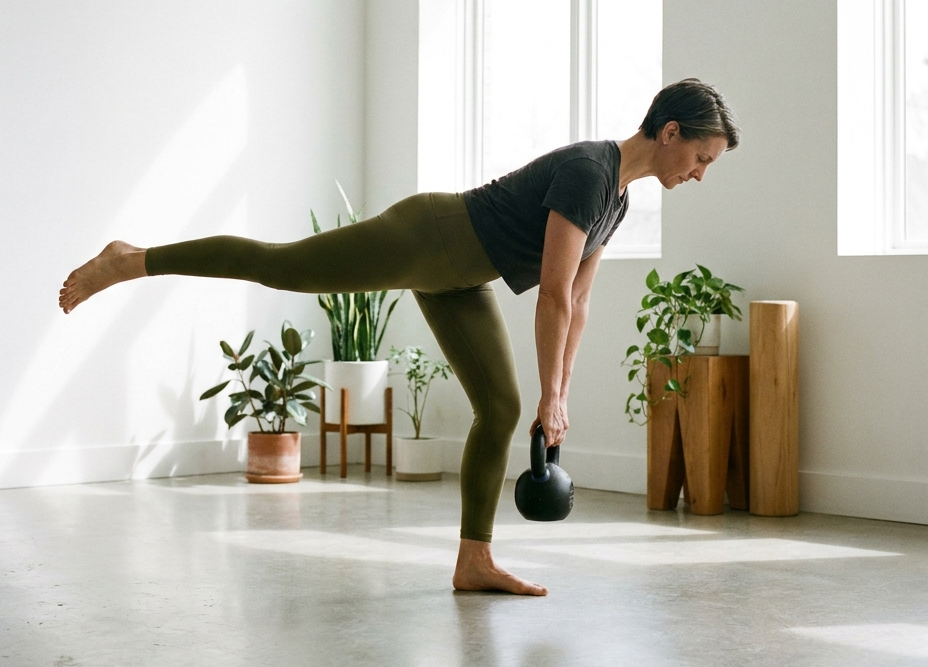
Try this right now. Stand up, place one foot on the back of your opposite calf, keep your arms at your sides, and hold for 10 seconds. If you wobbled, grabbed a wall, or could not hold it at all, you just learned something important about your health that no blood test would have caught.
A 2022 study in the British Journal of Sports Medicine followed 1,702 adults aged 51 to 75 for over 7 years. Those who failed this 10-second single-leg stance had an 84% higher risk of dying from any cause within the next decade, after adjusting for age, sex, BMI, and existing health conditions (Araujo et al., 2022). One in 5 participants failed. The failure rate climbed with each decade of life, but the mortality signal held regardless of when the decline started. Balance training after 40 is not physical therapy. It is a longevity practice most people skip entirely.
Key Takeaways
- Inability to stand on one leg for 10 seconds is linked to 84% higher all-cause mortality risk.
- Proprioception, your body's spatial awareness system, declines measurably starting in your late 40s.
- Balance is trainable at any age, with measurable improvement in 6 to 8 weeks.
- Most longevity protocols focus on strength and cardio while ignoring the system that keeps you upright.
What Balance Training Actually Targets
Balance is not a single ability. It is the output of three systems working simultaneously: your vestibular system (inner ear), your visual system, and your proprioceptive system (sensory receptors in your joints, muscles, and tendons that tell your brain where your body is in space). Think of it as a three-legged stool. Kick out any leg and you start to fall.
Most people think balance is something you either have or you lose. In reality, it is a skill maintained by neurological circuits that require regular input to stay calibrated. Your brain allocates resources to the systems you use. Stop challenging your balance, and those circuits get deprioritized, the same way a language you stop speaking starts to fade.
In practice, this means your balance at 55 is not a fixed consequence of aging. It is a reflection of how much you have asked your balance system to work over the past decade.
Why Your Balance Disappears Without Warning
Balance does not decline like cardiovascular fitness, where you notice yourself getting winded on stairs. It erodes silently. You compensate. You widen your stance when standing in a kitchen. You reach for the handrail without thinking. You avoid icy sidewalks. Each compensation masks the underlying loss until one day you step off a curb wrong and your reflexes are not fast enough.
The biology behind this is a three-system breakdown. Proprioceptive receptor density in your ankles and knees decreases measurably after age 50. The speed at which those receptors relay position data to your spinal cord and brain slows. In the vestibular system, nearly 50% of adults over 60 show physiological loss, a condition called presbyvestibulopathy (Agrawal et al., 2009). And in your central nervous system, the white matter tracts that integrate signals from all three balance systems lose connectivity with age.
The result is a widening gap between where your body is and where your brain thinks it is. That gap is the fall risk. And it starts opening years before anyone notices.
The Training Gap in Most Longevity Protocols
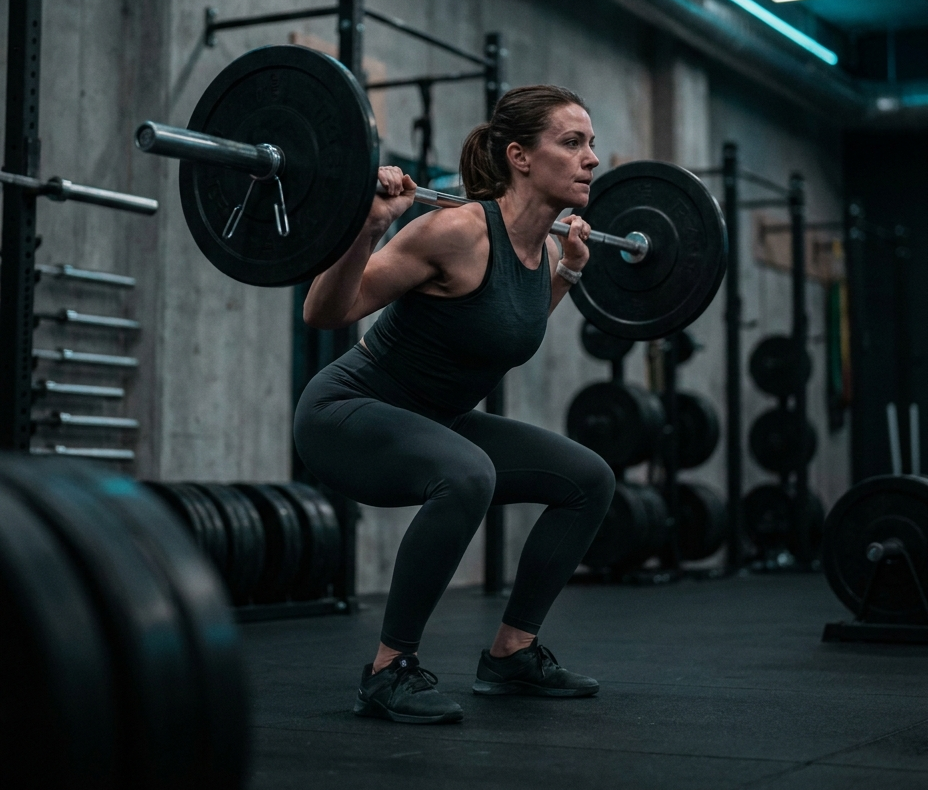
Here is what most longevity-focused people get right: they do Zone 2 cardio, they lift weights, they track their VO2 max. Here is what they skip: any deliberate balance work. The assumption is that strength training covers balance. It does not.
Strength gives you the muscular capacity to recover from a stumble. Balance gives you the neurological speed to detect the stumble in the first place. A 2020 study in Aging Cell found that exercise specifically improved vestibular input to motor neurons, a pathway that pure strength training does not target (Battilana et al., 2020). The researchers observed that age-linked deterioration in vestibular circuits was specifically mitigated by balance-challenging exercise, not by general resistance training.
This distinction matters because the consequences of a single fall after 50 cascade. Hip fractures in adults over 65 carry a 1-year mortality rate of 20 to 30%. The fall itself is rarely the problem. The immobility afterward triggers a spiral of muscle loss, cardiovascular deconditioning, and cognitive decline that is difficult to reverse.
Numbers Worth Knowing About Your Balance
| Signal | Concerning Level | Target |
|---|---|---|
| Single-leg stance (eyes open) | Under 10 seconds | 30+ seconds |
| Single-leg stance (eyes closed) | Under 5 seconds | 15+ seconds |
| Tandem stance (heel-to-toe) | Wobble within 15 sec | 30 seconds stable |
| Timed Up and Go (TUG) test | Over 12 seconds | Under 10 seconds |
| Single-leg squat depth | Cannot do one | Controlled to 45 degrees |
Read these together. If you can hold a single-leg stance for 30 seconds with eyes open but collapse in 3 seconds with eyes closed, your visual system is compensating for poor proprioception. That compensation disappears in low-light conditions, on uneven ground, or when you are tired. The eyes-closed test reveals your true balance baseline.
What to Do Starting This Week
1. Test your baseline. Stand on one leg, arms at sides, eyes open. Time it. Then repeat with eyes closed. Do both sides. Write the numbers down. This is your starting point, and you will retest every 4 weeks.
2. Add single-leg stance to your daily routine. While brushing your teeth, stand on one leg for the full 2 minutes, then switch sides. This is not a workout. It is a minimum effective dose that maintains your proprioceptive circuits through daily activation. Progress by closing your eyes once you can hold 30 seconds consistently.
3. Include 3 dedicated balance exercises, 3 times per week. Tandem walking (heel to toe, 20 steps forward and back), single-leg Romanian deadlifts with bodyweight only (8 per side), and lateral step-downs from a 4-inch step (10 per side). Total time: 8 to 10 minutes. Insert these at the end of any strength session or as a standalone micro-workout.
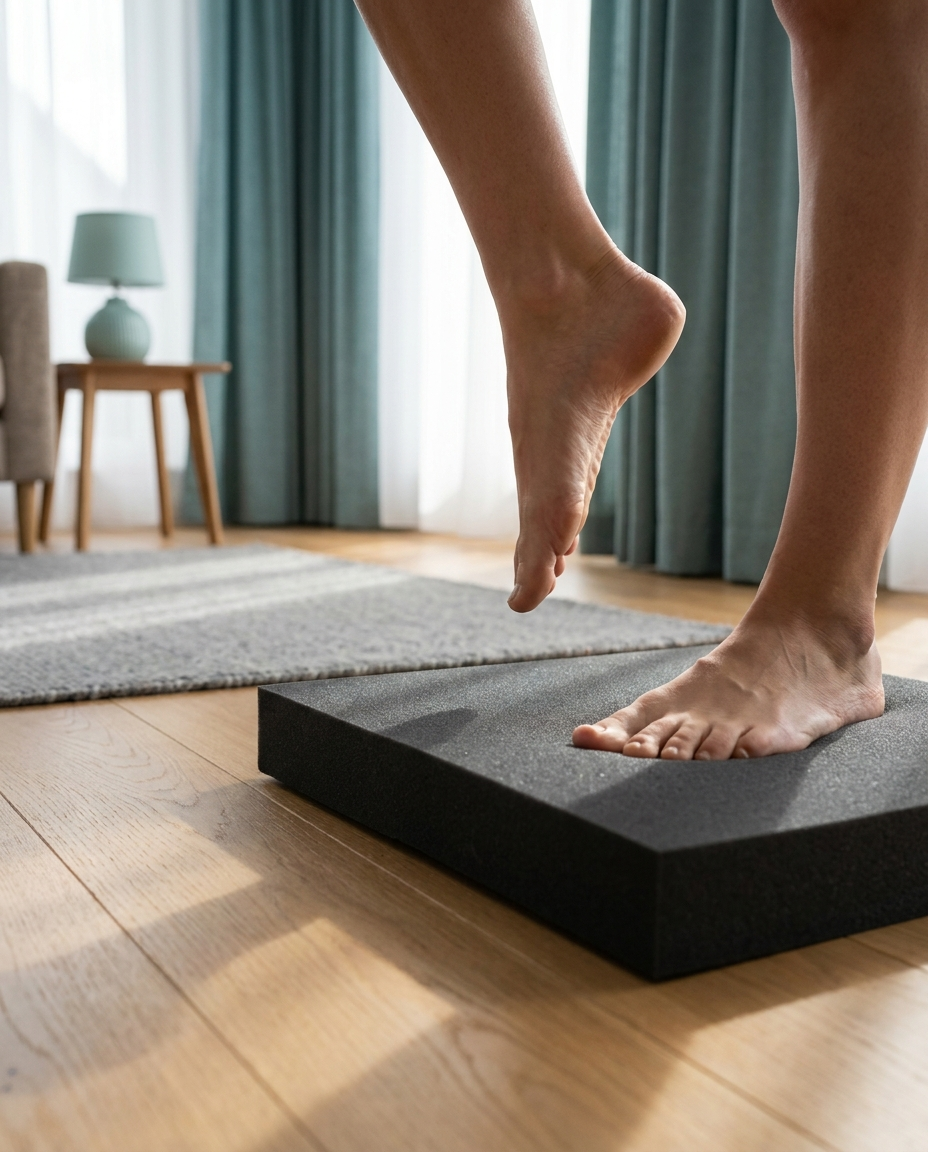
4. Train on unstable surfaces once per week. A foam balance pad or a folded towel under one foot forces your ankle proprioceptors to recalibrate in real time. Start with 30-second holds and progress to performing bodyweight squats on the pad. This is the fastest path to improving proprioceptive acuity.
5. Retest at week 8. Most people see measurable improvement in single-leg stance time within 6 to 8 weeks of consistent training. The neurological adaptations are faster than the muscular ones. Your brain rewires balance circuits before your muscles visibly change.
This is exactly the kind of functional capacity Rewind tracks. We monitor your movement quality alongside your biomarkers, so you catch proprioceptive decline before it shows up as a fall, not after.
Start Training Your Balance Today
Your VO2 max does not matter if you cannot stay upright. Add balance training to your protocol through Rewind.
FAQ
How long should I be able to stand on one leg at age 50?
At 50, you should hold a single-leg stance with eyes open for at least 30 seconds and with eyes closed for at least 10 seconds. The Araujo study used a 10-second cutoff, but that is the minimum survival threshold, not the goal.
Does strength training improve balance?
Partially. Strength training builds the muscular capacity to correct a loss of balance, but it does not train the proprioceptive speed needed to detect instability in the first place. Dedicated balance work targets different neurological pathways.
Can balance be improved after age 60?
Yes. A 2024 review of 155 studies found that balance-specific exercise interventions reduce fall risk even in adults over 75. Neuroplasticity does not stop. It slows. Consistent training produces measurable gains within 6 to 8 weeks at any age.
What is proprioception and why does it decline with age?
Proprioception is your body's ability to sense where it is in space without looking. Sensory receptors in your joints, muscles, and tendons relay position data to your brain. After 50, receptor density decreases, nerve conduction speed slows, and the brain's ability to integrate these signals weakens. Training reverses a significant portion of this decline.
How often should I do balance exercises?
Three dedicated sessions per week of 8 to 10 minutes each produces reliable improvement. Daily low-dose work, like standing on one leg while brushing your teeth, supplements the structured sessions and keeps proprioceptive circuits active between workouts.
Rewind Insight: Balance is the longevity metric nobody tracks until the first fall. The 10-second test is free, takes no equipment, and predicts your next decade more directly than most lab panels. If you have not tested yours, do it today.
You already train your heart and your muscles. The system that keeps you on your feet deserves the same attention. If your balance baseline surprised you, that is not a failure. It is a data point. Rewind can help you track it.
References
Araujo, C. G., de Souza e Silva, C. G., Laukkanen, J. A., Fiatarone Singh, M., Kunutsor, S. K., Myers, J., Franca, J. F., & Castro, C. L. (2022). Successful 10-second one-legged stance performance predicts survival in middle-aged and older individuals. British Journal of Sports Medicine, 56(17), 975-980. https://doi.org/10.1136/bjsports-2021-105360
Battilana, F., Steurer, S., Engber, T., Bhatt, D., Bhatt, T., & Bhattacharya, A. (2020). Exercise-linked improvement in age-associated loss of balance is associated with increased vestibular input to motor neurons. Aging Cell, 19(12), e13274. https://doi.org/10.1111/acel.13274
Agrawal, Y., Carey, J. P., Della Santina, C. C., Schubert, M. C., & Minor, L. B. (2009). Disorders of balance and vestibular function in US adults. Archives of Internal Medicine, 169(10), 938-944. https://doi.org/10.1001/archinternmed.2009.66

Member discussion